
Module Federation is one of those concepts everyone name-drops the moment “micro frontends” comes up in a meeting. Cool, share code at runtime, deploy teams independently, sounds great. Then someone on the team says “we’re on Vite, not webpack” and the whole conversation gets awkward. So what actually happens when you try to bring Module Federation into a Vite project? Some of it works beautifully. Some of it… really doesn’t, at least not yet.
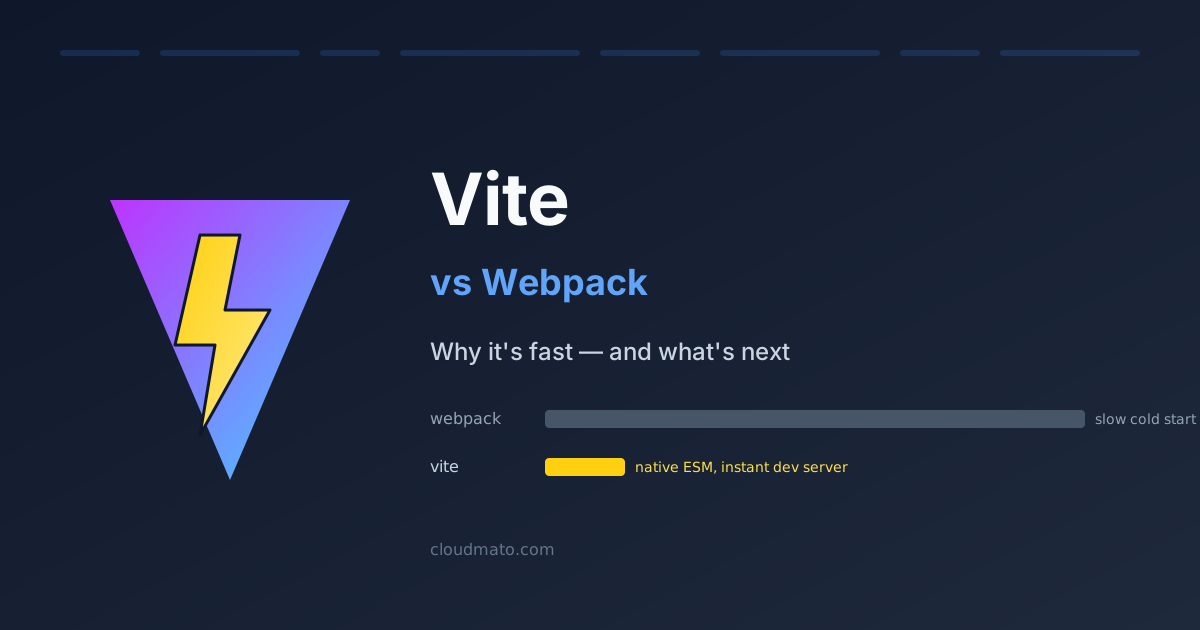
I remember the first time I switched a project from CRA (which uses Webpack under the hood) to Vite. The dev server came up in under a second. I genuinely stared at the terminal for a moment, waiting for something else to happen. Nothing did. That was it — it was ready. That’s not a small improvement over Webpack. It’s a completely different experience.
What Is Vite? Vite (French for “fast”, pronounced “veet”) is a frontend build tool created by Evan You — the same person who built Vue.js [1]. It launched in 2020 and has been growing fast. As of 2025, Vite logs 53 million weekly npm downloads against Webpack’s 36 million [5]. Its GitHub stars tell the same story: 78,000 vs Webpack’s 66,000 [5].