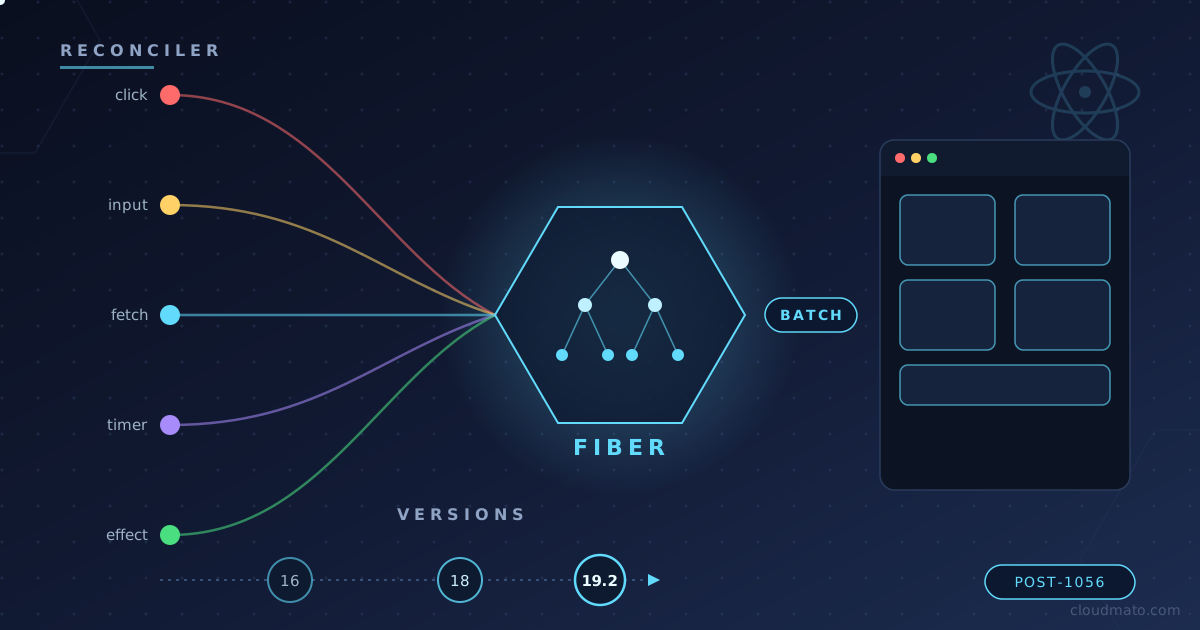
Ever clicked a button in a React app and just… trusted that the UI would update correctly? Yeah, me too, for years. I never really stopped to think about what happens between setState and the pixels changing on screen — until I started debugging a component that was re-rendering five times for a single click. That rabbit hole led me straight into Fiber, lanes, and the surprisingly long history of how React decides when to actually re-render your app.
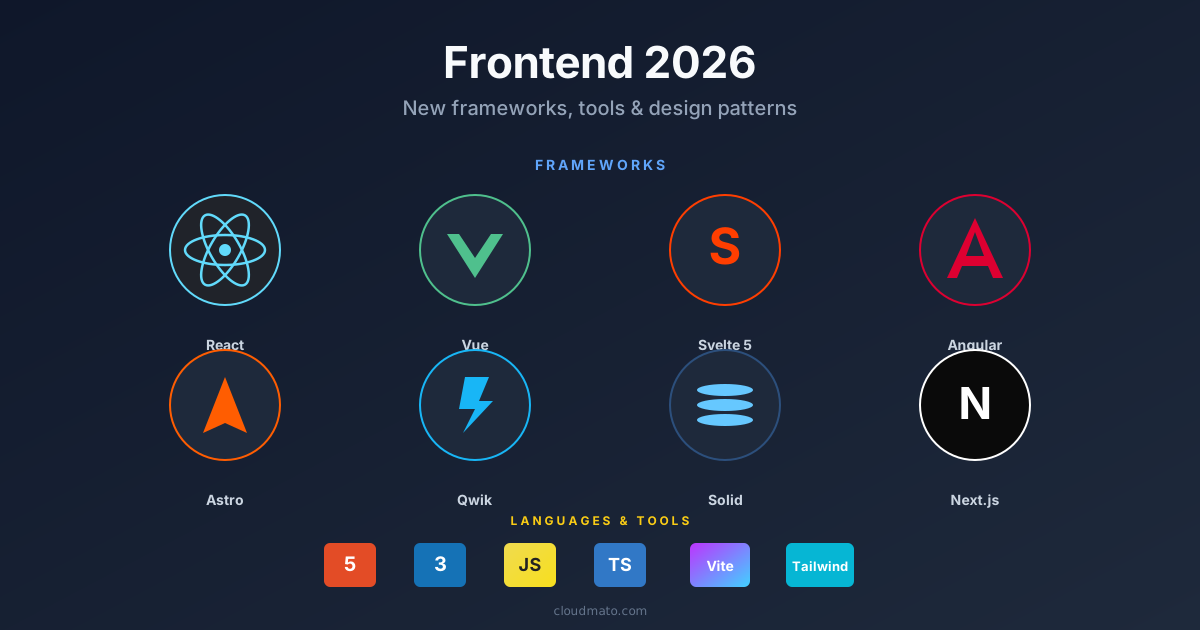
The frontend ecosystem shifts every year, but 2025-2026 felt structurally different. It wasn’t just new libraries — the underlying mental models changed. How we hydrate, bundle, structure components, and handle reactivity has moved in ways that actually affect how apps perform and how long they take to build. Here’s what’s worth paying attention to.
The Framework Landscape Is Fragmenting (In a Good Way) React still dominates with roughly 45% adoption [1], but calling it the default answer is getting harder to justify for every project type. Three challengers are serious now.
React remains the dominant UI library in the frontend ecosystem, and interviewers at startups and FAANG companies alike use React-specific questions to measure depth of knowledge [1]. This guide walks you through the most commonly asked questions in order of difficulty—from entry-level fundamentals all the way to expert-tier architecture and React 19 internals—so you can walk into any frontend interview fully prepared.
Beginner: Core Concepts Every Candidate Must Know 1. What is React, and what problem does it solve? React is a JavaScript library for building composable user interfaces maintained by Meta. It solves the problem of keeping the UI in sync with application state by tracking changes and updating only the affected parts of the DOM [2].