
Someone asked me this exact question last week, and it’s a good one because both setups look the same if you squint. A bunch of machines, some shared storage in the middle, work spread across nodes. So why does one get called “big data” and the other “microservices”? Are they just two words for the same cluster? Honestly, no. They’re built on opposite assumptions about one thing: where the data lives and who moves to whom.
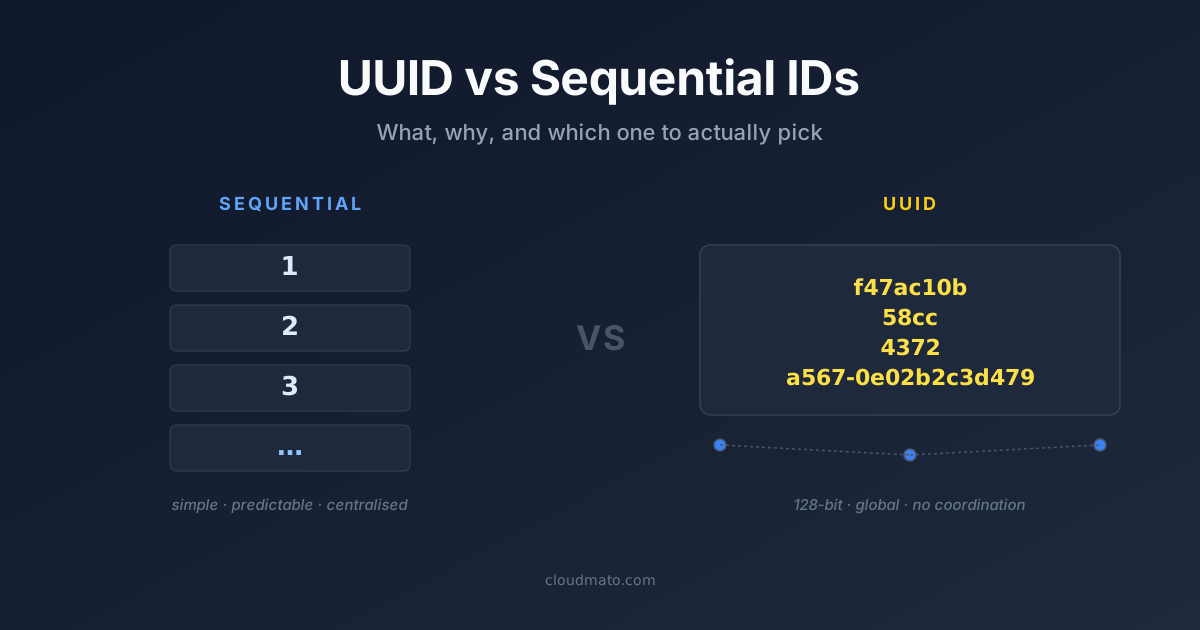
You expose an API endpoint like /api/orders/1042. That integer tells anyone listening — a competitor, an attacker, a curious user — exactly how many orders you have. Change the number to 1041, you get the previous order. Change it to 1, you get the very first one. No auth bypass needed. The ID itself is the information leak.
That’s the sequential ID problem in one paragraph. UUID exists to fix it — and a few other things that matter at scale.

Kafka looks deceptively simple from the outside — you publish to a topic, someone reads from it. Under the hood it is a fairly intricate distributed system where several pieces have to agree on who owns what before a single byte gets delivered. I spent a good amount of time untangling this, and most articles stop at “partitions give you parallelism” without explaining the actual handshake. Let me go deeper.