
Every request your app serves is a chance to do less work. Caching is just the art of not redoing work you already did. Sounds simple. It isn’t — there’s a whole stack of places you can stash data, each with its own rules, and picking the wrong layer (or the wrong expiry) costs you either stale bugs or a slow site.
I’ve spent enough hours staring at a page that “should have updated” but didn’t, only to realise the answer was cached three layers deep. So let me walk through every place you can cache — from the user’s browser all the way down to compiled bytecode on your server — and where each one bites you.

Everyone is building “REST APIs” nowadays. You have got endpoints, you return JSON, you use GET and POST and DELETE, you send back 404 when something is missing. Congratulations, you have a REST API. Right?
Well, according to the person who literally coined the term REST, probably not. And the piece you are missing is a scary-looking acronym called HATEOAS — the one part of REST that almost nobody implements and most people can’t even spell. I have been writing APIs for more than 8 years and honestly, for the longest time I treated HATEOAS as academic trivia. So let me untangle it: what it is, why the industry collectively ignores it, and the more interesting question — when you actually earn the right to call your thing a REST API.

Redis is one of those rare pieces of software where the source code is short enough to actually read and deep enough to teach you something new every time. I’ve spent a good amount of time going through the actual Redis source — and what strikes me every time is how deliberately every design choice was made. Nothing is accidental.
So let’s actually design one from the ground up — not a toy, but an architecture that mirrors what Redis actually does. Data structures, event loop, protocol, expiry, persistence. All of it.

The browser is a hostile environment. That one sentence explains more about why SPA authentication goes wrong than any whitepaper ever has. You’re shipping your entire application — including your auth logic — to a machine you don’t control, in a runtime where malicious scripts, rogue browser extensions, and network-level attackers are all operating in the same sandpit. Get the design wrong and you’re not just leaking a JWT. You’re handing over session persistence, user identity, and trust — all at once.

Fifty teams shipping frontend code independently sounds like a dream. Then React 17 and React 18 collide at runtime, your design system has six competing “latest” versions in production simultaneously, and a shared header owned by nobody quietly breaks for 30% of your users.
This is the real problem with micro frontends at scale. The pattern isn’t complicated. The governance layer — the shared kernel, versioning contracts, the theming system that can’t shatter when Team 47 deploys on a Friday — that’s where things fall apart. Here’s how to actually structure it.

The cable behind your monitor has a more dramatic history than most people realize. Every decade or so, some group of companies decides the current standard is holding them back, invents something new, and the industry spends the next ten years transitioning — leaving everyone with a drawer full of adapters they’ll never use again. Here’s why that happened, and why it’ll probably keep happening.
The Analog Jungle: Composite, S-Video, and Component Before there was HDMI or DisplayPort, there was a mess of analog standards that ran televisions and early home electronics for decades. Each one existed because the previous one was genuinely not good enough.

It’s 3am. PagerDuty is screaming. Checkout is failing for some customers but not others. You SSH into a box, tail the logs, and you’re greeted with a wall of INFO: processing request lines with no order ID, no user ID, no trace of which downstream service choked. Now you’re not debugging — you’re archaeology.
I’ve been on the other side of that night more times than I’d like to admit. And honestly, the difference between a 5-minute fix and a 3-hour outage is almost never the bug itself. It’s whether your logs told you anything useful. So let’s talk about what good logging actually looks like — not the textbook “log everything” advice, but the stuff that saves you when production is on fire.

You open Windows 11, right-click the Start menu, and you see: Command Prompt, PowerShell, Windows Terminal. Three things. You just wanted to run a quick command. Now you’re questioning your life choices.
This confusion is real, and honestly, Microsoft did not make it easy. But there’s a genuinely good reason PowerShell exists — and once you understand it, the whole picture starts to make sense.
CMD Was Never Really a Shell — It Was a Stopgap Let’s start at the beginning. cmd.exe — the Command Prompt — has been around since Windows NT launched in December 1987 [1]. Before that, COMMAND.COM handled things in MS-DOS. So yeah, Windows has had a command-line interface for nearly 40 years.

At some point in a large enough frontend codebase, the build itself becomes the bottleneck. Thousands of components, dozens of teams, one monolithic bundle — something has to give. Module Federation is one of the more interesting solutions people have reached for, and it’s worth understanding properly before you commit to it.
What Is Module Federation? Module Federation is a feature introduced in Webpack 5 that lets JavaScript applications dynamically load code from other JavaScript applications at runtime — not at build time [1]. That single distinction is what makes it different from everything else.

Module Federation is one of those concepts everyone name-drops the moment “micro frontends” comes up in a meeting. Cool, share code at runtime, deploy teams independently, sounds great. Then someone on the team says “we’re on Vite, not webpack” and the whole conversation gets awkward. So what actually happens when you try to bring Module Federation into a Vite project? Some of it works beautifully. Some of it… really doesn’t, at least not yet.
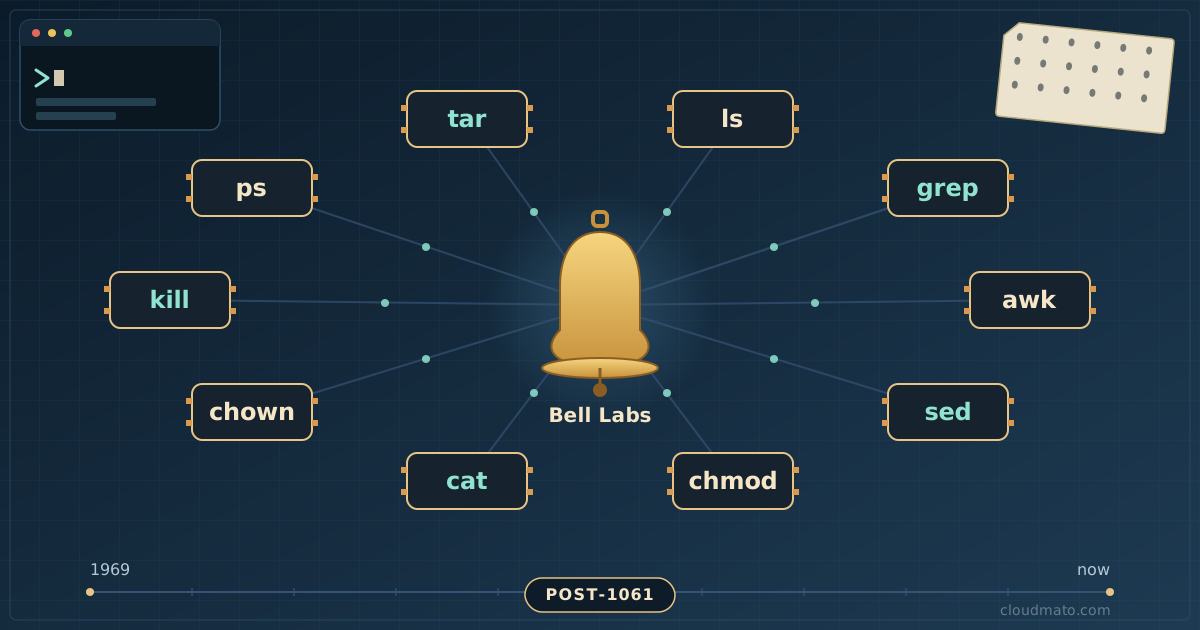
I type ls, cd, and grep probably a few hundred times a day. Never once, in 8+ years of doing this, did I stop to wonder where these tiny two-and-three letter words actually came from. Turns out, almost every single one of them has a story — some guy at Bell Labs in the early 1970s, working on a machine slower than your smartwatch, solving a problem he had that exact day. Let’s go through ten of the most-used Unix commands and dig into why they exist.
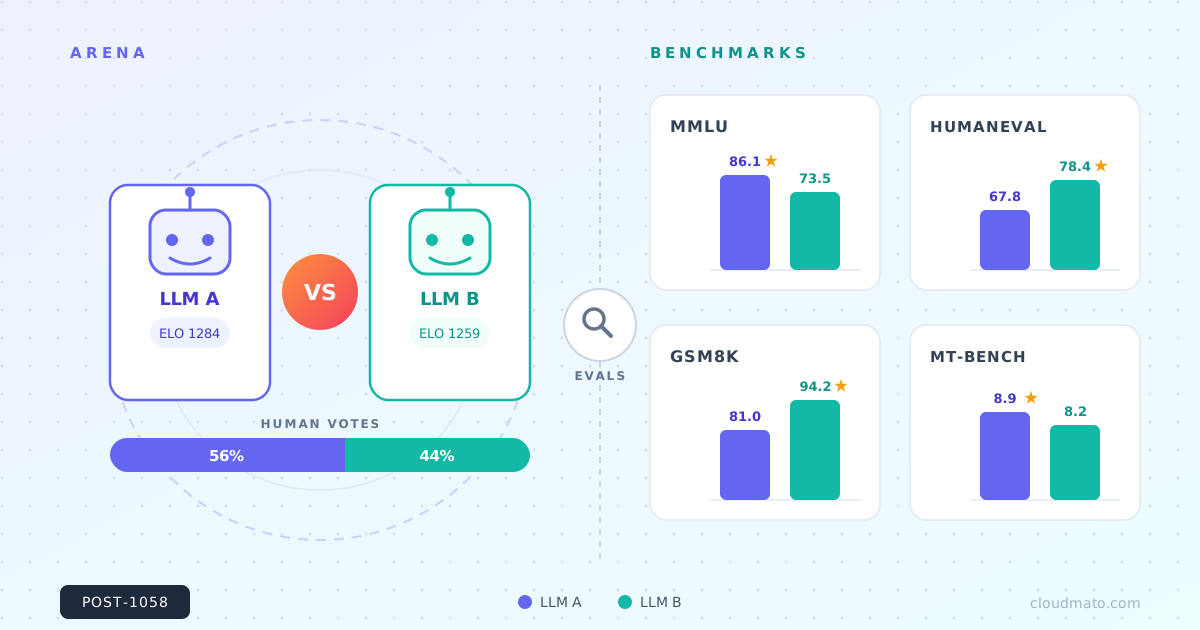
Every couple of weeks some AI lab drops a new model and immediately claims it’s the smartest thing on the planet. Then another lab does the same thing a week later. If you’ve ever tried to figure out which one is actually better, you’ve probably stared at a wall of charts with names like MMLU, GPQA, and SWE-bench and felt your eyes glaze over. I went down this rabbit hole recently, and here’s the short version: there’s no single scoreboard. There are at least four completely different ways people measure “better,” and once you know what each one is actually doing, the whole AI leaderboard circus starts to make a lot more sense.
Someone asked me this exact question last week, and it’s a good one because both setups look the same if you squint. A bunch of machines, some shared storage in the middle, work spread across nodes. So why does one get called “big data” and the other “microservices”? Are they just two words for the same cluster? Honestly, no. They’re built on opposite assumptions about one thing: where the data lives and who moves to whom.

Everyone talks about ChatGPT and Claude like they just appeared one day. You type something, you get an answer, magic. But have you ever stopped to ask what it actually takes to make one of these things? Not the chat interface — the model itself. The thing that took months, hundreds of millions of dollars, and enough electricity to power a small town.
I’ve been curious about this for a while, partly because the numbers are genuinely hard to believe until you sit with them. So I went digging through what’s actually known — the leaked architecture details, the hardware announcements, the data center buildouts. Some of it is public, some of it is well-sourced speculation, and some of it the labs keep deliberately vague. Let me walk you through what we actually know.

Everyone talks about HTTP/3 like it’s a free speed upgrade you flip on and forget. It mostly is — but “mostly” is doing a lot of work in that sentence. HTTP/3 is now used for roughly 35% of all web requests globally [1], so this isn’t a research toy anymore. The thing is, almost no one explains why it’s faster, where it actually loses to HTTP/2, and — the question nobody asks — whether your particular site even benefits. Let me walk through it the way I’d explain it to a friend over chai.
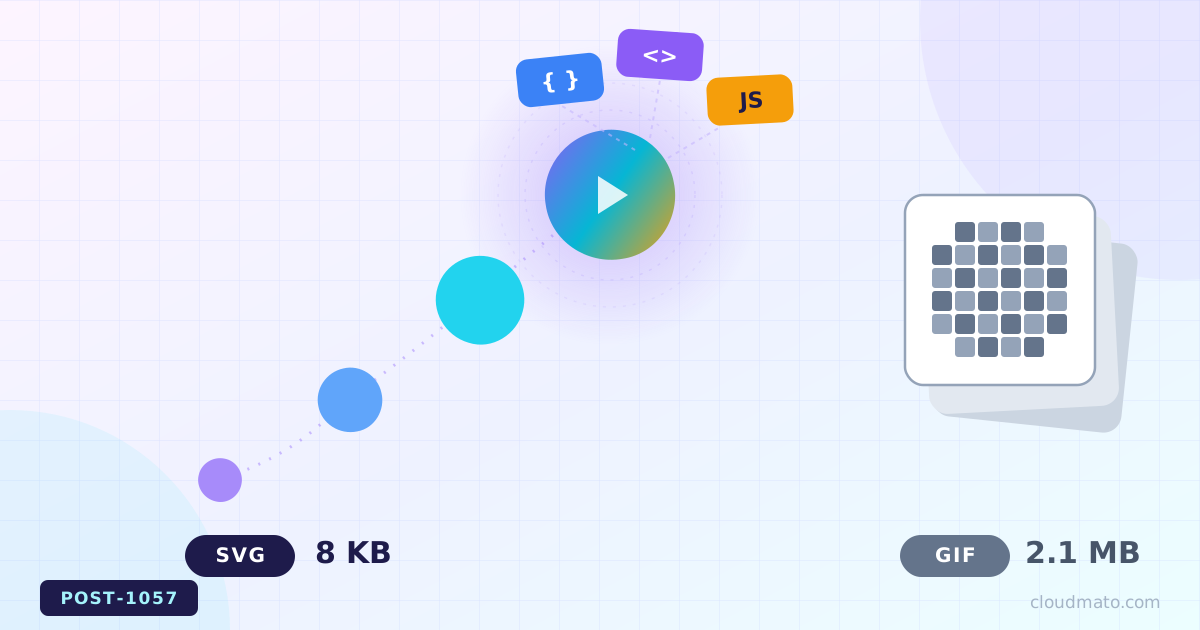
Remember when GIFs were basically the only way to show something moving on a webpage without dragging in a full video player? Spinning loaders, little waving mascots, “loading…” icons — all GIFs, all looking slightly blurry and oddly heavy for something so small. Turns out there’s been a much better option sitting right under our noses for years: the animated SVG. Let’s get into how you actually build one, and whether it really deserves to replace GIF.
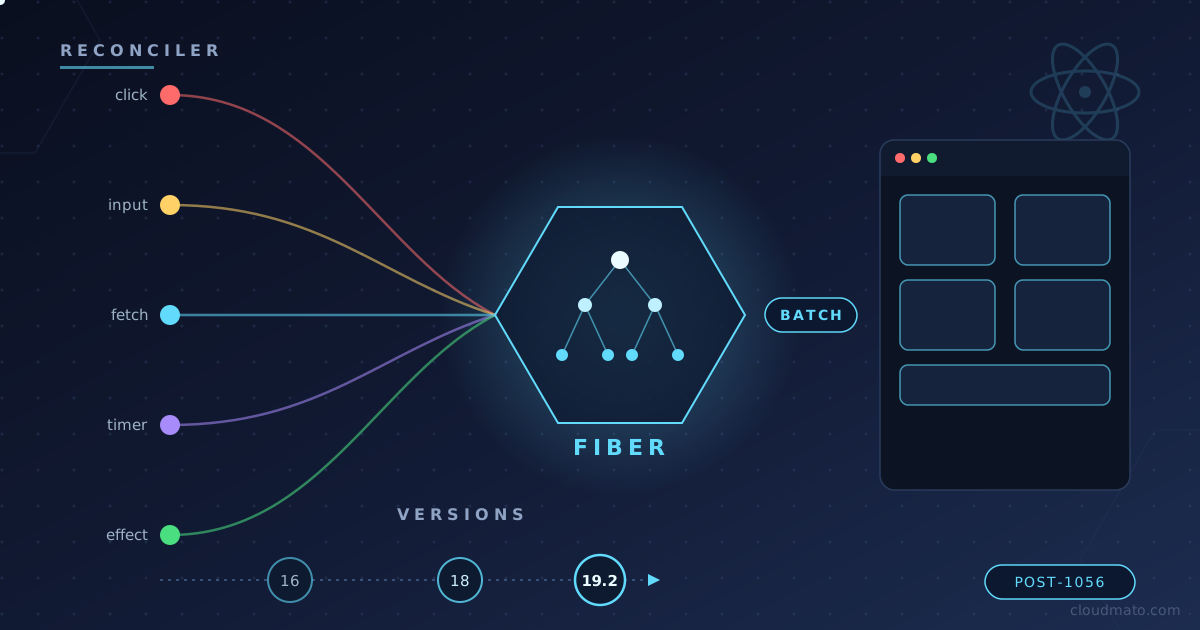
Ever clicked a button in a React app and just… trusted that the UI would update correctly? Yeah, me too, for years. I never really stopped to think about what happens between setState and the pixels changing on screen — until I started debugging a component that was re-rendering five times for a single click. That rabbit hole led me straight into Fiber, lanes, and the surprisingly long history of how React decides when to actually re-render your app.
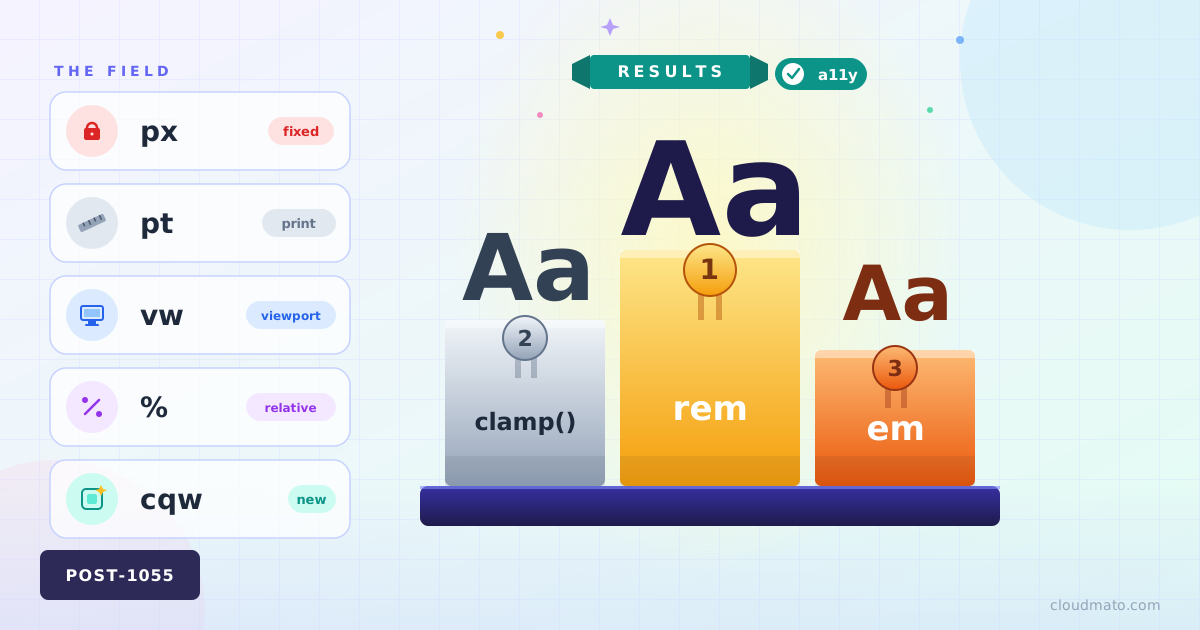
Ever opened a project’s CSS and found font sizes set in px, em, rem, %, and vw — all in the same file, sometimes on the same element? Yeah, me too. Font size feels like the most boring property in CSS until you realize there are at least eight different ways to express it, and picking the wrong one quietly breaks accessibility for a chunk of your users without throwing a single error.

Every January some report says “this is the year AI changes everything,” and every year I roll my eyes a little. But sitting here in mid-2026, I genuinely can’t roll my eyes anymore. Browsers are agents now. Chips are shipping “physical AI” models. Robots are clocking actual factory shifts. Some of this is real progress, some of it is still marketing dressed up as a product launch — and honestly, figuring out which is which is half the fun.
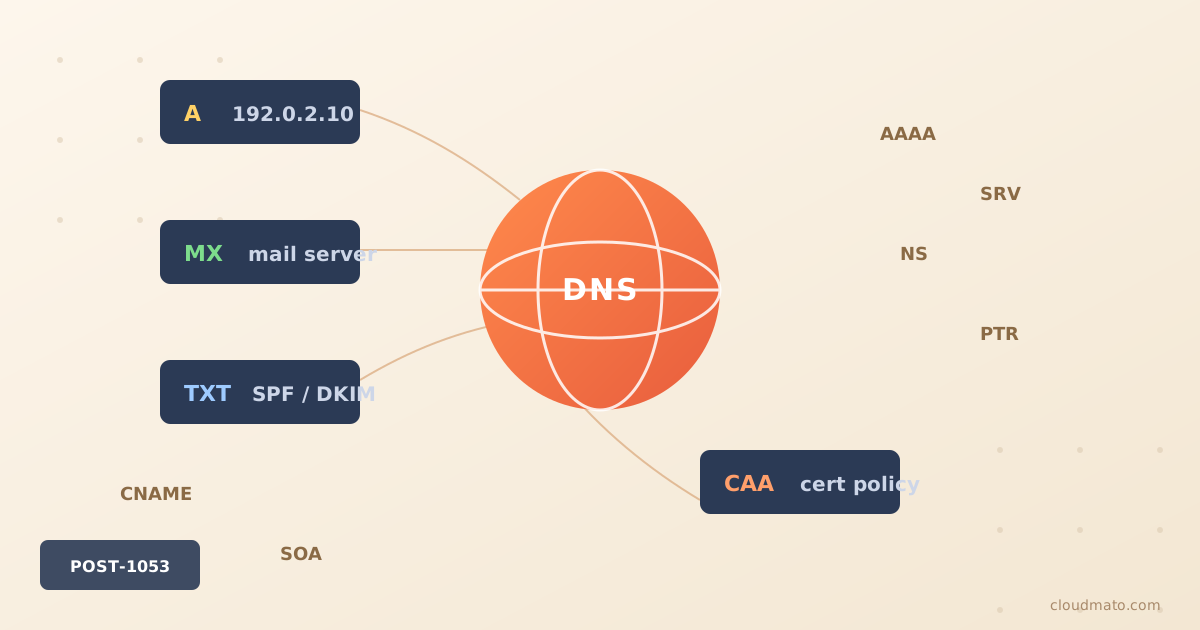
Open up any domain’s DNS settings and you’ll see a wall of cryptic codes — A, AAAA, MX, TXT, SRV, CAA, SVCB — and it genuinely looks like someone kept bolting random parts onto an old engine. Which, honestly, is exactly what happened. Every single one of these record types exists because the internet hit a wall that the existing records couldn’t get past, and once you see that history laid out, the whole mess actually starts to make sense.
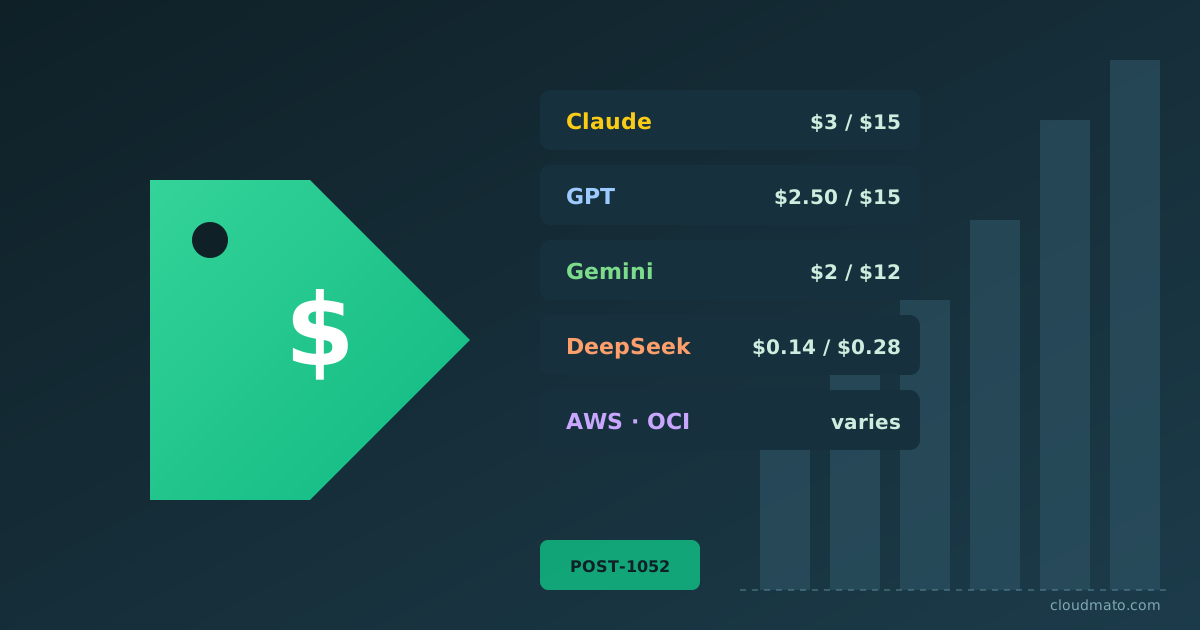
I spent a chunk of last weekend with about fifteen pricing pages open in different tabs, trying to figure out why a small side project’s API bill quietly tripled in a month. Turns out the answer wasn’t “the model got more expensive” — it was that I picked the wrong model for the job, on the wrong platform, without caching anything. So I went down the rabbit hole properly: every major LLM API, every cloud wrapper, and the budget options nobody talks about until their AWS bill shows up.
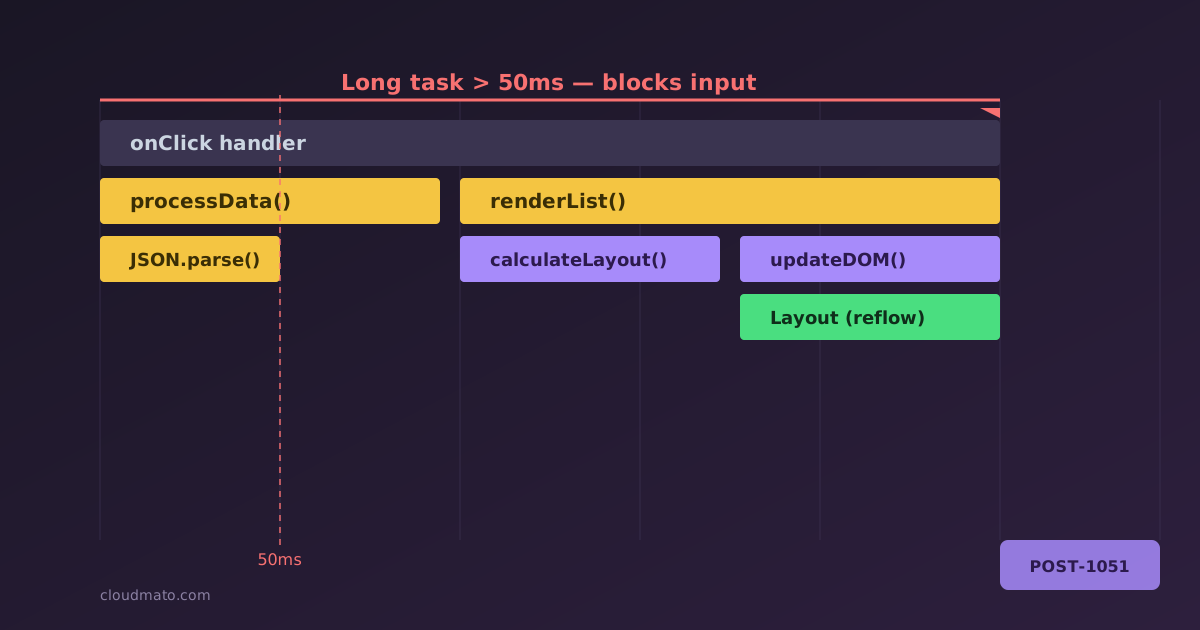
Open the Performance panel in Chrome DevTools for the first time and it looks like someone spilled a box of crayons across your screen. Dozens of colored bars, half a dozen tracks, three tabs at the bottom that all seem to show the same thing but slightly differently. No wonder most devs record one trace, get scared, and go back to console.log debugging. I did exactly that for years - until I actually sat down and learned what each piece means, and now it’s the first tool I reach for when something “feels slow.”

Every time someone asks me “should I use sessions or JWTs?”, I know what’s actually behind the question. They’ve read a few blog posts, seen the word “stateless” thrown around like it’s automatically better, and now they’re stuck. So let’s settle this properly - not with buzzwords, but with what’s actually happening on the wire and on your server.
Sessions: the “we keep a record at the front desk” approach Think of session-based auth like checking into a hotel. You show your ID once at the front desk, the staff verifies it, and they hand you a room key card. That card doesn’t contain your name, your passport number, or your booking details - it’s just a random number. The hotel’s computer system has all your actual information stored in their database, linked to that card number.
“Just cache it in Redis” — you’ve probably heard that in a code review, a system design interview, or a Stack Overflow comment. It’s almost a reflex at this point. But why Redis specifically? Why not a regular database with a good index, or any other in-memory store? I dug into the history, the architecture, and the current landscape of alternatives, and the story is genuinely more interesting than the meme lets on.

Your app is getting slower over time. Scroll position jumps. Tabs are consuming 800 MB of RAM. You open Task Manager and watch Chrome eat memory like it’s buffet day. Something is leaking — but where? The Chrome DevTools Memory tab is sitting right there, and most developers either ignore it or open it once, get confused by “Shallow Size” and “Retainers,” and quietly close it. This guide is for people who want to actually use it.
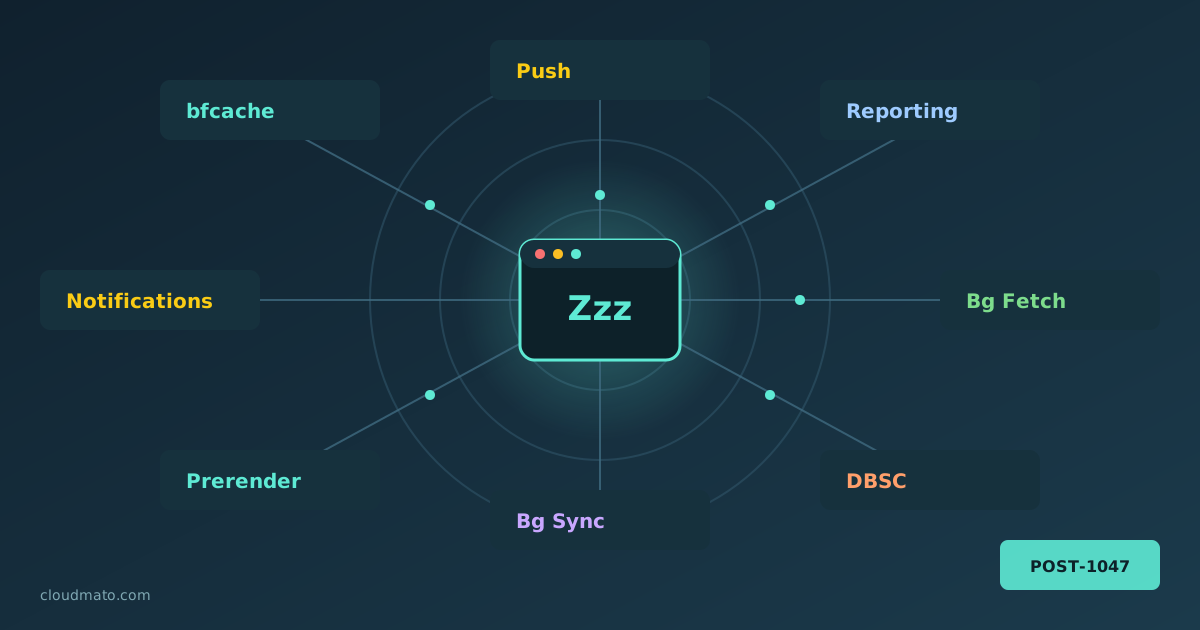
Your web app is probably doing things you’ve never actually debugged. Pages being prerendered before the user clicks anything, form submissions silently queued while offline, push notifications arriving at a sleeping service worker, sessions cryptographically bound to hardware keys — all of this happens through Chrome’s background service APIs, running completely invisibly. The Background Services panel in Chrome DevTools is where you finally get to watch all of it.
Finding the Panel Open DevTools (F12 or right-click > Inspect), go to the Application tab, and scroll the left sidebar until you hit the “Background Services” section. You’ll find a list covering essentially every “invisible” API Chrome supports:

Open DevTools, click on Application, and look at the left sidebar. Cookies, Local Storage, Session Storage, IndexedDB, Cache Storage, Shared Storage, Background Services… it’s a lot. I’ve seen senior developers reach for localStorage for everything — auth tokens, shopping carts, even megabytes of API responses — simply because it’s the one they know. That’s not always wrong, but it’s rarely the best choice. Let’s actually go through what each of these mechanisms does, where you’d find it in DevTools, and — more importantly — when you should reach for it instead of the other six options sitting right next to it.

I get why this question keeps coming up. A WebSocket stays open, remembers who you are, and lets the server push data to you without you asking for it again and again. So why are we still firing off a hundred separate HTTP requests for a single page load when we could just open one persistent pipe and be done with it? Honestly, the question sounds smarter than most people give it credit for — and the answer is not “because HTTP is better.” It’s a lot more nuanced than that.
I kept hearing “use WebSockets for real-time stuff” without anyone explaining what actually happens on the wire. So I went and read the RFC, poked at a few servers, and figured I’d write down what I found — including the part that confused me the most: whether WebSocket is a protocol of its own or just some clever trick on top of HTTP.
So what is a WebSocket? A WebSocket is a persistent, full-duplex communication channel between a browser (or any client) and a server, opened over a single TCP connection [1]. Full-duplex means both sides can send messages whenever they want — not just in response to a request. That’s the part that breaks the usual mental model of the web.

Ask three people what “loop” means in AI right now and you’ll get three different answers. One will say the agent loop. Another will start talking about model collapse and feedback loops. A third will mention human-in-the-loop from some compliance meeting. They’re all correct, which is exactly why the word has become so confusing.
I’ve been writing software for over 8 years, and I’ve watched plenty of jargon get recycled. But “loop” is special because it’s not one trend — it’s at least four different ideas that all happen to share the same word, and all of them got hot at roughly the same time. So let me untangle them.

Every request you make to a website carries a small pile of metadata you never see. Headers. They decide whether your connection is encrypted, whether a page can be embedded in an iframe, which CDN edge served you, and whether the browser should remember a cookie for a year. I wanted to see what a real, busy production site sends, so I pointed curl at an Amazon endpoint and dumped the response headers. Turns out there’s a lot to unpack.
Everyone slaps “RESTful” on their API. Open any docs page, scroll the marketing copy, and there it is — “our clean, RESTful API.” But here’s the uncomfortable bit: by the strict definition, almost none of them actually are. So the question you’re really asking is whether the word still means anything if you break some of the rules. Honestly, that’s where it gets tricky.
Short answer first, because I hate articles that bury it: yes, you can still call it RESTful in everyday conversation, but no, it isn’t a REST API by Roy Fielding’s original definition unless it’s hypertext-driven. Both of those things are true at the same time, and the gap between them is the whole story.

Run git log on any project that’s more than a year old and you’ll find the truth about a team. Half the messages say “fix”, “update”, “wip”, “asdf”, or my personal favourite — “stuff”. And then one day production breaks, you run git blame on the offending line, and the commit that introduced it just says “minor changes”. Cool. Very helpful. Thanks, past me.
I’ve been writing code for over a decade and I’ll be honest: for the first few years my commit messages were garbage. It wasn’t until I had to debug someone else’s six-month-old code (and then realised the someone else was me) that the penny dropped. A diff tells you what changed. Only the commit message can tell you why. That’s the whole game.

Two questions get mashed together constantly: “what is TLS termination” and “is SSL a transport layer thing?” People assume the answer to the second is obviously yes — it’s literally called Transport Layer Security, right? Well. That naming has fooled a lot of smart people, and the confusion bleeds straight into how folks reason about termination. So let me untangle both, because once the layer question clicks, termination stops feeling like magic.
Most developers I talk to have this vague understanding about testing — they know they should do it, but they’re not always clear on which tests do what and why it matters. So you write a unit test here, run some manual clicks there, and hope the whole thing works. That’s not a strategy. Testing has distinct types for distinct purposes.
Let me walk you through what each testing type actually does and, more importantly, which ones companies genuinely implement versus which ones are nice-to-have theory.
Everyone talks about SOLID principles. Your senior dev mentions them in code review. Your architecture docs reference them. But why do actual projects become unmaintainable garbage despite teams “knowing” SOLID? The answer: understanding SOLID and actually building with it are two completely different things [1].
Most developers learn about SOLID early, nod along, then immediately violate these principles the moment a deadline hits. Let me show you where the rubber meets the road — and why it’s harder than it sounds.
Most developers lump all indexes together — “just something that makes queries fast” — without understanding that Elasticsearch and Oracle DB are solving completely different problems. They index the same data in fundamentally opposite ways, and that difference shapes everything about how they perform.
Let me show you why a full-text search on Oracle feels like pulling teeth, while Elasticsearch makes it look trivial.
The Core Problem: Two Different Use Cases Oracle databases are built to answer questions like: “Give me the row where user_id = 5” or “Find all orders between January 1 and January 31.” Exact matches and range queries. The data is structured, indexed by column, and queries are usually precise.
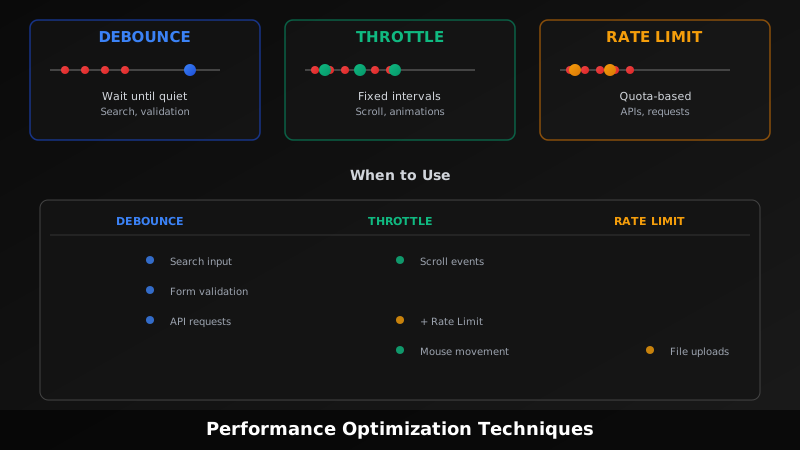
Everyone conflates these three concepts. You see them mentioned together constantly, people use the words interchangeably, and most articles mix them up or bury the differences in jargon. Here’s what they actually are, why they’re different, and when to use them. [1]
Debouncing: Wait Until The Storm Passes Debouncing delays execution until after a period of inactivity.
Imagine someone typing into a search box. Every keystroke is an event. Without debouncing, you’d fire an API request with every single keystroke — character 1, character 2, character 3, and so on. That’s wasteful.
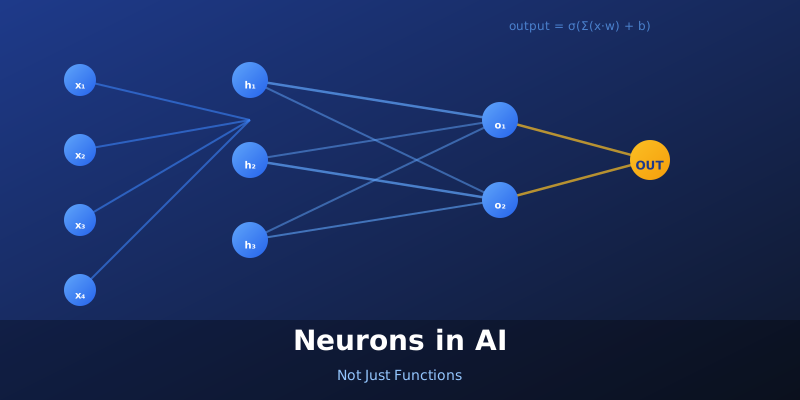
If you’ve heard “neural network” thrown around in tech circles, you probably imagined something biological. The term neuron can make beginners think they need to understand brain biology to work with AI. They don’t. But the confusion about what a neuron actually does — and how it differs from a function you’d write in code — is real. And that difference matters [1][2].
What’s a Neuron, Really? A neuron in AI is a computational unit. Stripped down, it’s a thing that takes inputs, does math, and produces an output. Sounds like a function, right? It kind of is. But that’s where the similarity ends.
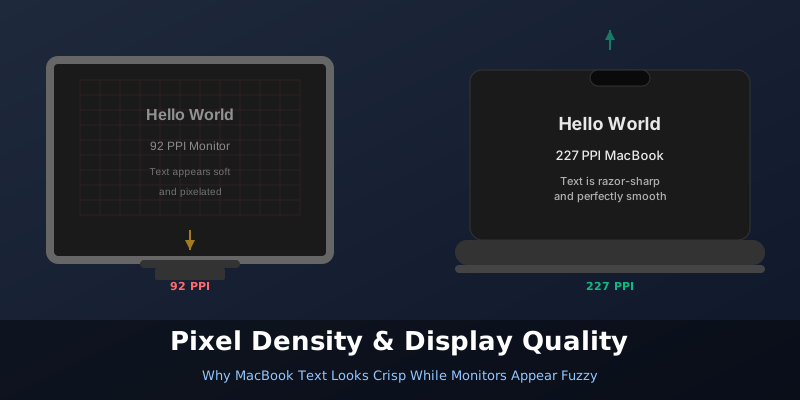
You buy a Full HD (1920×1080) monitor and check the specs. Your MacBook also outputs to a similar resolution. Yet when you start working, the text on the monitor looks noticeably softer. Not broken or unreadable — just not as sharp as what you see on your MacBook’s built-in screen. What’s going on?
The answer isn’t about resolution numbers. It’s about pixel density.
The Pixel Density Problem Here’s the thing: two displays with the same resolution at different sizes will have completely different pixel densities [1]. A 24-inch Full HD monitor has roughly 92 pixels per inch (PPI) [2]. Your MacBook Air? Try 227 PPI [1]. Your 16-inch MacBook Pro? 254 PPI [1].
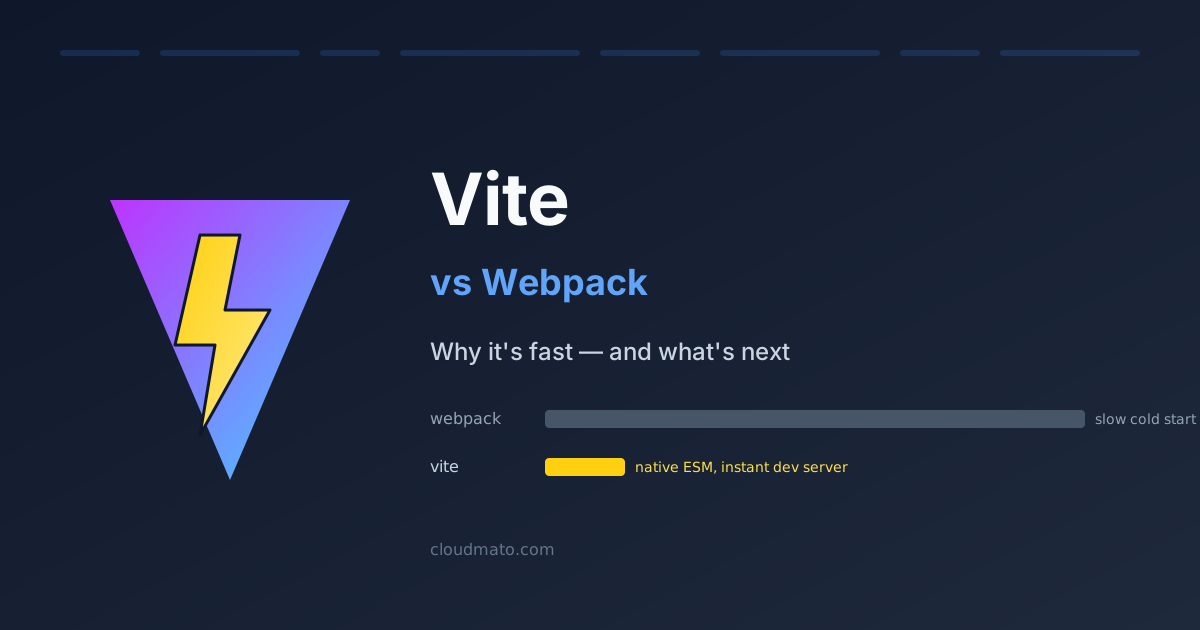
I remember the first time I switched a project from CRA (which uses Webpack under the hood) to Vite. The dev server came up in under a second. I genuinely stared at the terminal for a moment, waiting for something else to happen. Nothing did. That was it — it was ready. That’s not a small improvement over Webpack. It’s a completely different experience.
What Is Vite? Vite (French for “fast”, pronounced “veet”) is a frontend build tool created by Evan You — the same person who built Vue.js [1]. It launched in 2020 and has been growing fast. As of 2025, Vite logs 53 million weekly npm downloads against Webpack’s 36 million [5]. Its GitHub stars tell the same story: 78,000 vs Webpack’s 66,000 [5].
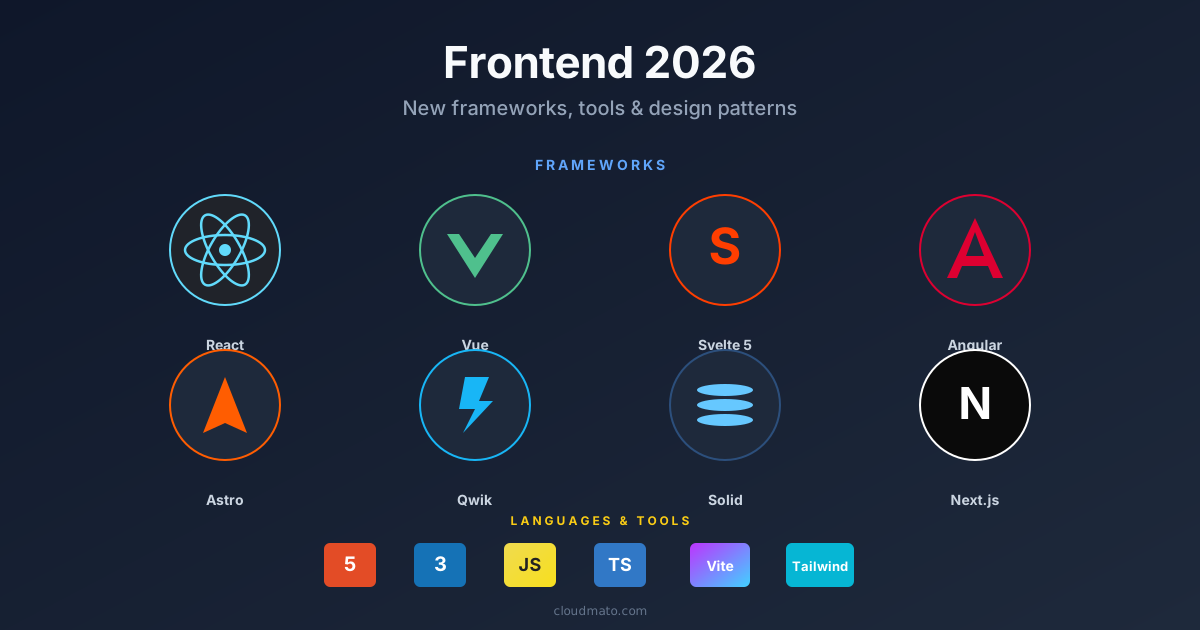
The frontend ecosystem shifts every year, but 2025-2026 felt structurally different. It wasn’t just new libraries — the underlying mental models changed. How we hydrate, bundle, structure components, and handle reactivity has moved in ways that actually affect how apps perform and how long they take to build. Here’s what’s worth paying attention to.
The Framework Landscape Is Fragmenting (In a Good Way) React still dominates with roughly 45% adoption [1], but calling it the default answer is getting harder to justify for every project type. Three challengers are serious now.

Scan a QR code every day and never once think about those three squares. I was in that category for years. Turns out they are doing some genuinely clever engineering work — and the reason there are exactly three, not four, is more interesting than you’d expect.
They Have a Name: Finder Patterns The three large squares are officially called position detection patterns, though almost everyone calls them finder patterns [4]. They sit in the top-left, top-right, and bottom-left corners of every QR code — never the bottom-right. That asymmetry is intentional, and it’s the whole point.
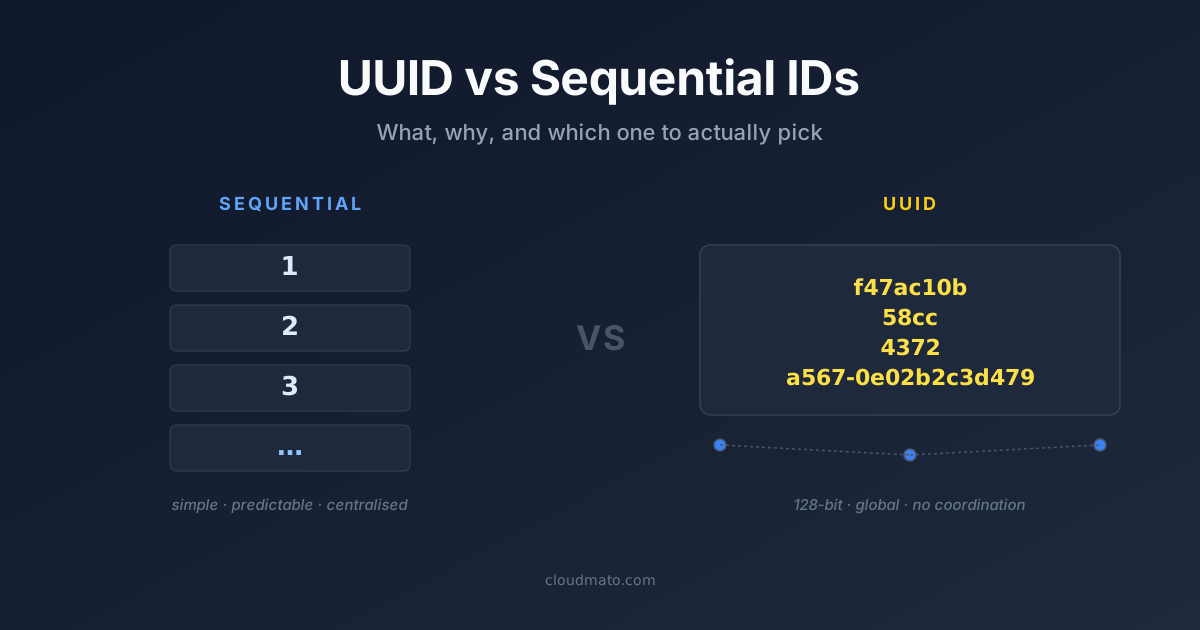
You expose an API endpoint like /api/orders/1042. That integer tells anyone listening — a competitor, an attacker, a curious user — exactly how many orders you have. Change the number to 1041, you get the previous order. Change it to 1, you get the very first one. No auth bypass needed. The ID itself is the information leak.
That’s the sequential ID problem in one paragraph. UUID exists to fix it — and a few other things that matter at scale.
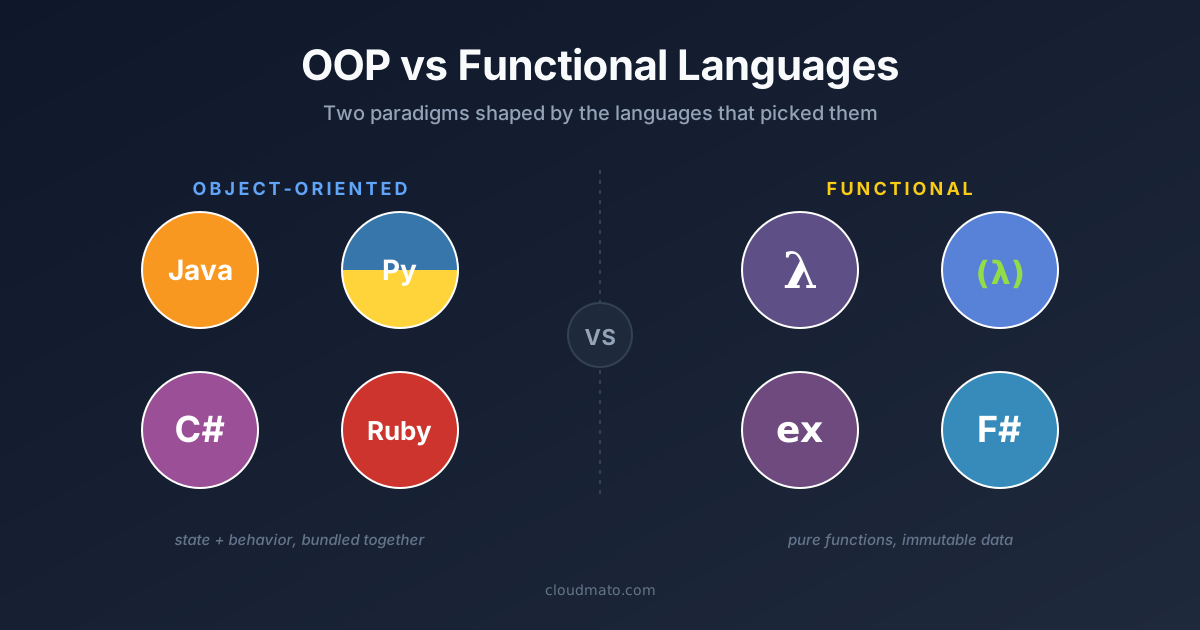
OOP is 50+ years old. Classes, objects, inheritance — it works, everyone knows it, almost every popular language supports it. So why are people talking about functional programming like it’s some revelation? Because OOP is great at modelling things. FP is great at modelling transformations. Most real software has both, and conflating the two is where the confusion starts.
What Is Functional Programming, Actually? Not “functions inside a class.” That’s just OOP with functions.
Everyone setting up a Kubernetes cluster eventually hits the same wall: how do I actually get traffic into this thing? Then the docs mention ClusterIP, NodePort, LoadBalancer, Ingress, Gateway API, MetalLB — and it spirals. Worse, there’s a Service type called “LoadBalancer” and there are actual load balancers, and they are not the same thing. Let me go through the real options, where each one sits in the stack, and what genuinely makes sense to reach for.

I’ve seen “zero day” used in breach headlines, movie trailers, and vendor marketing emails. Almost always it means “scary hack.” That’s not wrong exactly — but it misses the precise thing that makes a zero-day structurally different from every other attack. That precision actually matters when you’re trying to understand your risk.
Three Terms That Are Not the Same I see these used interchangeably constantly. They’re not.

Ninety-four percent of developers use Git [6]. The remaining six percent are mostly in specialized industries — game studios, large finance companies — and even they are slowly migrating. Every other version control system has either died, is in hospice, or survives only in a corner niche. That’s a strange outcome for software one person wrote in about two weeks.
The BitKeeper Incident That Started All of This Git didn’t appear because someone sat down and thought “let me design the perfect version control system.” It appeared because someone yanked a free license away.
The “just scale microservices” question keeps coming up whenever Spark enters the conversation. It sounds logical — you already have distributed services, just throw more at the problem. But this comparison collapses under a pretty basic question: what kind of problem are you actually solving?
It Is Not a Database. Not a Queue. People come to Spark expecting something like a faster database or a smarter Kafka. Neither is accurate.

Nobody ever forgets their first fight with CSS centering. You Google it, paste a Stack Overflow snippet, and move on — never stopping to ask if that was the right way or just a way. In 2026, there are at least seven distinct ways to center a div, and some of them should have been buried years ago.
Here’s all of them, ranked worst to best.
The Full Comparison Method Horizontal Vertical Verdict display: table-cell Yes Yes Never Negative margins Yes Yes Never abs + translate(-50%, -50%) Yes Yes Avoid inset: 0 + margin: auto Yes Yes Sometimes margin: auto Yes No Horizontal only Flexbox Yes Yes Good default CSS Grid Yes Yes Best default CSS Anchor Positioning Relative Relative Specific use 1. display: table-cell — Please Stop This is what people did before Flexbox existed. You wrap your element in a fake table, trick the browser into treating it like a <td>, and abuse vertical-align: middle.

Kafka looks deceptively simple from the outside — you publish to a topic, someone reads from it. Under the hood it is a fairly intricate distributed system where several pieces have to agree on who owns what before a single byte gets delivered. I spent a good amount of time untangling this, and most articles stop at “partitions give you parallelism” without explaining the actual handshake. Let me go deeper.
Every few years the “right” way to do layout in CSS changes completely. If you started writing CSS before 2015, you probably have a small trauma response every time someone mentions clearfix. Let me walk through how we got here — and what you should actually reach for in 2026.
The Table Era (1990s – mid 2000s) HTML tables were never designed for layout. They existed to display tabular data. Then web designers discovered that <table>, <tr>, and <td> gave you something CSS couldn’t yet deliver: predictable column control [1].

Everyone calls MCP “just an API calling layer for AI”. That framing is wrong — and it’s exactly why the “we already have Swagger” objection keeps coming up. Both things need unpacking.
What MCP Actually Is MCP stands for Model Context Protocol. Anthropic announced it in November 2024 [1], and by December 2025 it was donated to the Linux Foundation under the Agentic AI Foundation, co-founded with Block and OpenAI [2]. That adoption speed alone is worth noting.

OOP has been around for fifty years. Everyone in software has taken a course on it. Most have read about SOLID, inheritance, encapsulation, polymorphism. And yet — I keep seeing the same design mistakes in codebase after codebase, from startups to enterprise projects.
Knowing the theory is not the same as writing good OOP. Here’s where it actually goes wrong.
The God Object Start a project, create a UserService class. Someone adds payment logic to it. Then notification handling. Then authentication checks. Six months later: a 2000-line file that does everything, depends on everything, and breaks every time anyone touches it.

Amazon didn’t set out to build the world’s largest cloud platform. It stumbled into one while trying to stop its own engineers from reinventing the same infrastructure wheel every few months.
The Internal Mess That Started It All Around 2000, Amazon was building Merchant.com — a product to let third-party retailers like Target and Marks & Spencer spin up e-commerce stores on Amazon’s infrastructure [2]. What followed was an organizational disaster. Every team was independently building its own version of the same storage, compute, and database primitives. No shared APIs, no standard way to access anything.
Most blogs I have seen over the years run on WordPress — a database, PHP, plugins, security patches every other week. A lot of moving parts for a site that basically publishes text. Hugo is the opposite of all that. No database. No runtime. Just plain HTML files served off a CDN, generated in under a second.
What is Hugo exactly — and why is it so fast? Hugo is an open-source static site generator written in Go [1]. You write content in Markdown, pick a theme, run one command, and it produces a folder of plain HTML, CSS, and JS. That folder is your entire website. Nothing runs on the server. No PHP, no Python, no Node process to keep alive.

You see it in the browser tab. You see it next to the site name in search results. You think of it as the logo of a website. So why is it called a favicon? That doesn’t sound like it has anything to do with tabs or logos at all. And you’re right — it doesn’t. The name is a relic of what the icon was originally built for, not what it does today.
TypeScript became the most-used language on GitHub in August 2025 — overtaking Python and JavaScript for the first time in over a decade [4]. 78% of professional developers now write TypeScript [5]. And yet, open almost any legacy codebase, startup MVP, or quick utility script and you’ll still find plain .js files staring back at you. That’s not laziness. There are real, structural reasons for it.
What Is TypeScript, Actually? TypeScript is JavaScript with types bolted on. Microsoft built it to address a real problem — large JavaScript codebases become unmaintainable fast. When a codebase has tens of thousands of lines and dozens of contributors, you can’t know what a function expects just by reading a call site [1].

The line between frontend developer and AI engineer is blurring fast. In 2026, the most in-demand web developers aren’t just crafting beautiful UIs—they’re wiring those UIs directly to large language models, vector databases, and autonomous agents. If you already know React, TypeScript, or Next.js, you are far closer to that future than you might think.
Why Frontend Developers Have a Head Start The modern AI application stack runs on TypeScript, React, and HTTP APIs—the exact tools you already use every day [1]. Frameworks like Next.js have become the default output of AI-powered UI builders, and the Vercel AI SDK is already a first-class citizen in the React ecosystem [2]. Unlike data scientists who must first learn deployment and UI, you already know how to ship products. Your challenge isn’t learning how to build—it’s learning which new primitives to build with.
JavaScript once had no built-in way to split code across files — a limitation that spawned an entire ecosystem of competing module formats. Today, developers encounter require(), import, .mjs, .cjs, AMD, and UMD, often all in the same project. This guide demystifies every module system, explains when to use each, and maps out the clear path forward.
Why JavaScript Needed Module Systems In the early days of the web, JavaScript was a scripting language meant for simple page interactions. As applications grew, developers stuffed everything into global variables — leading to naming collisions and unmaintainable “spaghetti” code [1]. The community responded by inventing module patterns outside the language itself: first Immediately Invoked Function Expressions (IIFEs) to create private scopes, then formal module specifications like AMD and CommonJS. Only in 2015 did JavaScript finally gain a native module system via the ES6 specification [6].
Every day your phone buzzes with news alerts, chat messages, and ride updates — all while the apps responsible for them are closed. But how exactly does a message originating on some remote server find its way to your locked screen in milliseconds? And no, your phone is not constantly asking “got anything for me?” — the answer is far more elegant than that.
The Big Question: Does the Phone Poll for Notifications? The short answer is no. Modern mobile operating systems do not repeatedly poll (pull) a server to check for new messages [8]. Instead, both iOS and Android maintain a single, long-lived persistent connection to a centralised gateway run by Apple or Google. When a notification is ready, the gateway pushes it down that open channel to your device [8]. This fundamental push model means:

India’s most trusted examination board, CBSE, was rocked by a sweeping cybersecurity scandal in May 2026 when a 19-year-old ethical hacker demonstrated live, unrestricted access to its On-Screen Marking (OSM) evaluation system — including shell access to production servers and free downloads of student answer sheets from an unsecured cloud bucket [1][2]. The breach put the personal and academic data of an estimated 20 lakh (2 million) Class 12 students at risk [5]. This article unpacks every layer of the hack, explains what it means for students and families, and maps out what the government must do to prevent a repeat.

Cloud computing is reshaping how the world runs software — the global market is on track to approach $1 trillion in 2026 [1], powered by AI workloads, SaaS expansion, and enterprise digital transformation. Yet if you already deploy your apps on a DigitalOcean Droplet or a similar VPS, you might be asking: do I actually need to change anything? Here is an honest, practical answer.
What Is Cloud Computing? Cloud computing is the delivery of computing resources — servers, storage, databases, networking, software, and analytics — over the internet on a pay-as-you-go basis [1]. Rather than owning physical hardware, you rent capacity from a provider and access it from anywhere. The three dominant players are AWS (~33% market share), Microsoft Azure (~23%), and Google Cloud (~12%), collectively controlling more than 60% of the global cloud infrastructure market [3].

India is the world’s second-largest smartphone market — and one of its most targeted by cybercriminals. In 2025 alone, Indians filed 28.15 lakh cybercrime complaints and lost a staggering ₹22,495 crore to digital fraud [2]. If you use a smartphone for banking, UPI payments, or even just WhatsApp, you are a target. Here is your complete, no-nonsense guide to locking down your phone before the next scam call reaches you.

Picking the right AI tool in 2026 is less about which is smartest and more about which fits your wallet. The market now spans from genuinely powerful free tiers all the way to $300-per-month power-user subscriptions — and the gap between them is wider than ever. Here’s a definitive, budget-first guide to every major AI tool ranked from $0 to $300/month, so you can stop guessing and start choosing.
The AI Pricing Landscape in 2026 One defining feature of the 2026 AI market is pricing convergence at the $20/month mark [1]. ChatGPT Plus, Claude Pro, Google Gemini AI Pro, Microsoft Copilot Pro, and Perplexity Pro have all independently landed at approximately $20/month for their standard paid tier [2]. Above and below that anchor, prices fan out dramatically — from completely free tiers to enterprise plans costing hundreds per month [3].

The iPhone vs Android debate is one of tech’s most enduring rivalries — and in 2026, it remains genuinely competitive. Yet despite Android’s dramatic improvements in update longevity and camera hardware, the iPhone continues to hold meaningful, measurable advantages across several critical dimensions. Whether you’re a first-time buyer or considering a switch, here are six areas where iPhone consistently comes out ahead.
Security and Privacy: iPhone’s Most Durable Lead When it comes to protecting your data, iPhone holds a structural edge that goes beyond marketing. Apple’s App Tracking Transparency (ATT) framework, introduced in iOS 14.5 and refined since, blocks third-party ad trackers by default — Android users must manually configure similar protections [1]. A 2025 Privacy International report ranked iOS ahead of stock Android on twelve of fifteen privacy criteria examined, noting that while the gap has narrowed since 2020, it persists on default settings, data retention policies, and cross-service data sharing [2].
You’re a developer testing a local server, or trying to reach an internal corporate tool, and Chrome slams the door with a red “Your connection is not private” screen. There’s a hidden escape hatch baked right into the browser: type thisisunsafe. This article explains exactly what this trick does, where it came from, when it’s acceptable to use it — and when it could get you seriously burned.
What Is “thisisunsafe”? thisisunsafe is a secret keyboard passphrase built into Chromium-based browsers — including Google Chrome and Microsoft Edge — that lets you override SSL/TLS certificate error pages [1]. When Chrome blocks a site due to an invalid, expired, or self-signed certificate and displays errors like NET::ERR_CERT_INVALID or NET::ERR_CERT_AUTHORITY_INVALID, typing thisisunsafe (with the browser window focused, no text field required) instantly dismisses the warning and loads the page [2].

React remains the dominant UI library in the frontend ecosystem, and interviewers at startups and FAANG companies alike use React-specific questions to measure depth of knowledge [1]. This guide walks you through the most commonly asked questions in order of difficulty—from entry-level fundamentals all the way to expert-tier architecture and React 19 internals—so you can walk into any frontend interview fully prepared.
Beginner: Core Concepts Every Candidate Must Know 1. What is React, and what problem does it solve? React is a JavaScript library for building composable user interfaces maintained by Meta. It solves the problem of keeping the UI in sync with application state by tracking changes and updating only the affected parts of the DOM [2].
The AI landscape in 2026 is both exciting and overwhelming. There are dozens of tools, each promising to transform how you work—but using the wrong one for the wrong job wastes time and money. This guide breaks down the most popular AI tools by category so that whether you are a developer, creator, or curious beginner, you know exactly where to start.
AI Chat Tools: Your General-Purpose AI Companions Chat-based AI tools are the best entry point for most people. They let you ask questions, draft content, brainstorm ideas, and summarize documents through a simple conversational interface—no technical knowledge required.

Millions of people use Claude every day — but there’s a crucial distinction that trips up beginners and developers alike: a Claude.ai subscription and an Anthropic API key are two entirely separate products with different pricing, access methods, and intended audiences. Understanding which one you actually need can save you money and prevent frustrating “why doesn’t this work?” moments.
What Is the Claude.ai Subscription? A Claude.ai subscription gives you access to Anthropic’s conversational AI interface through the web app, desktop client, and mobile apps [1]. Think of it as a Netflix-style service — you pay a flat monthly fee and get a polished, user-friendly chat experience.

MacBooks are sleek, powerful, and undeniably popular — but they’re far from perfect. Whether you’re a frustrated Apple owner or someone deciding between platforms, this guide breaks down the most common MacBook problems and the key areas where Windows laptops come out on top.
Common MacBook Problems You Should Know About Despite their popularity, like any technology product, MacBooks come with their share of issues. Here are the most frequent pain points users report:

This blog is generated by Claude with the web_search tool, written into Markdown, and rendered by Hugo.
How it works You open a local page, type a topic, and Claude does the research, the writing, and the citations [1]. The post then lands in content/posts/ and is pushed to git in one step.