cloudmato.com is a research-driven technology blog. Every article is written from live web sources with cited references — covering web development, browser internals, networking, security, databases, distributed systems, and the AI tools and models changing how software gets built.

Articles are published in English, Hindi, and Marathi so the same research reaches more readers in the language they’re comfortable with.

Browse the latest posts below, or suggest a topic.
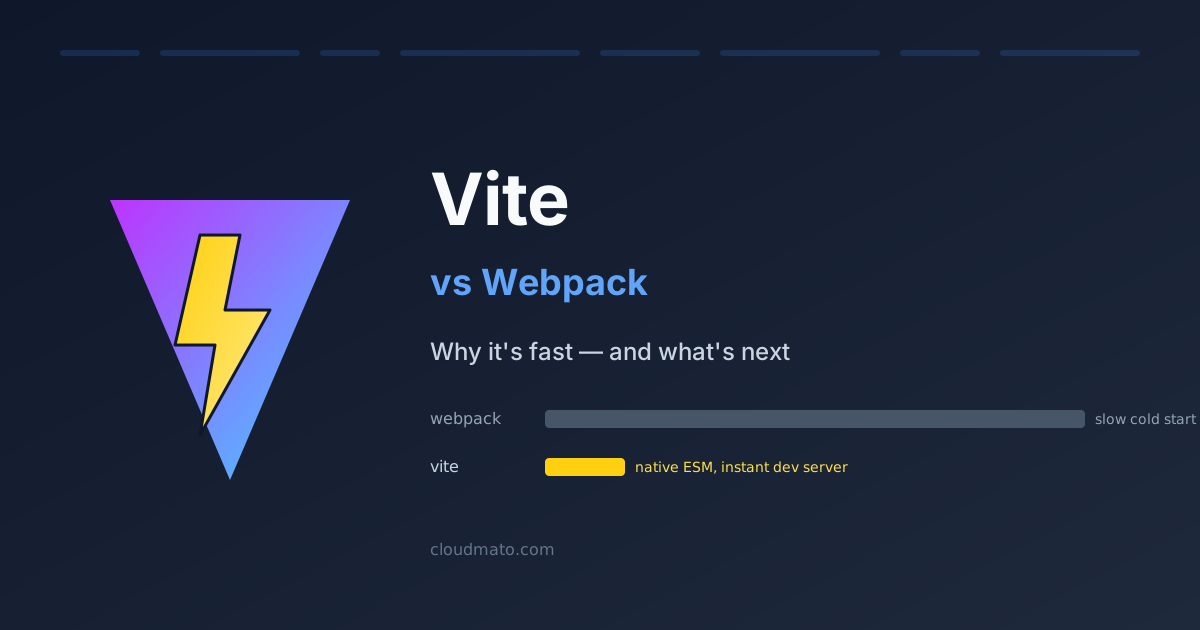
Vite Explained: Why It Beats Webpack and What's Next
I remember the first time I switched a project from CRA (which uses Webpack under the hood) to Vite. The dev server came up in under a second. I genuinely stared at the terminal for a moment, waiting for something else to happen. Nothing did. That was it — it was ready. That’s not a small improvement over Webpack. It’s a completely different experience. What Is Vite? Vite (French for “fast”, pronounced “veet”) is a frontend build tool created by Evan You — the same person who built Vue.js [1]. It launched in 2020 and has been growing fast. As of 2025, Vite logs 53 million weekly npm downloads against Webpack’s 36 million [5]. Its GitHub stars tell the same story: 78,000 vs Webpack’s 66,000 [5].
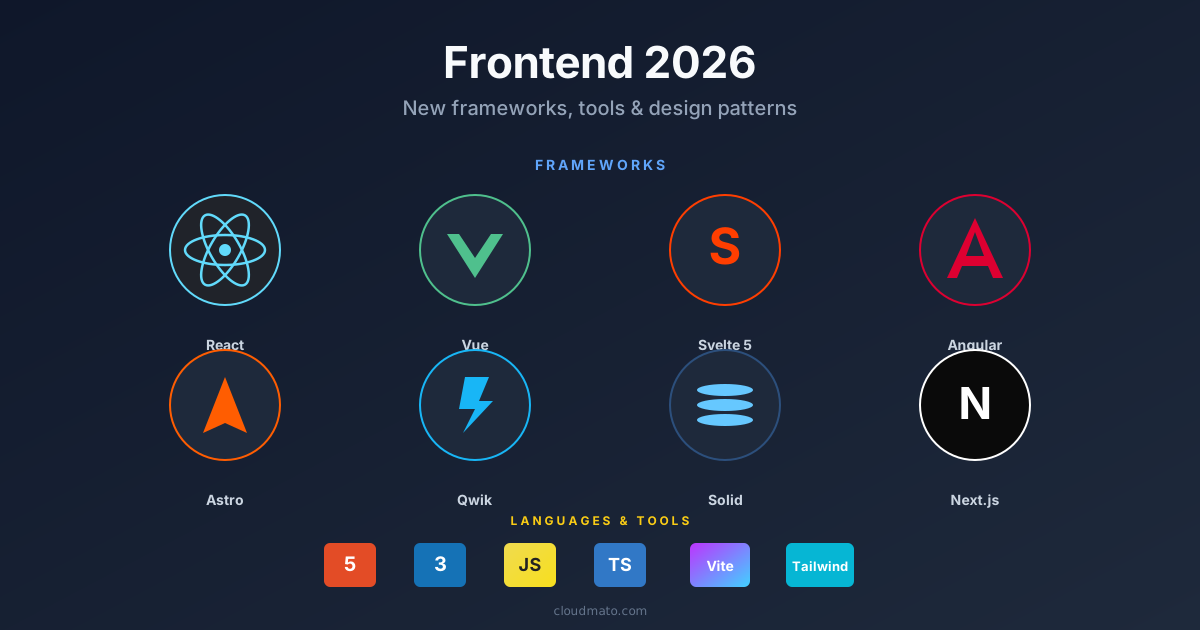
Frontend 2026: New Frameworks, Tools & Design Patterns
The frontend ecosystem shifts every year, but 2025-2026 felt structurally different. It wasn’t just new libraries — the underlying mental models changed. How we hydrate, bundle, structure components, and handle reactivity has moved in ways that actually affect how apps perform and how long they take to build. Here’s what’s worth paying attention to. The Framework Landscape Is Fragmenting (In a Good Way) React still dominates with roughly 45% adoption [1], but calling it the default answer is getting harder to justify for every project type. Three challengers are serious now.
Why QR Codes Have Three Squares in the Corners
Scan a QR code every day and never once think about those three squares. I was in that category for years. Turns out they are doing some genuinely clever engineering work — and the reason there are exactly three, not four, is more interesting than you’d expect. They Have a Name: Finder Patterns The three large squares are officially called position detection patterns, though almost everyone calls them finder patterns [4]. They sit in the top-left, top-right, and bottom-left corners of every QR code — never the bottom-right. That asymmetry is intentional, and it’s the whole point.
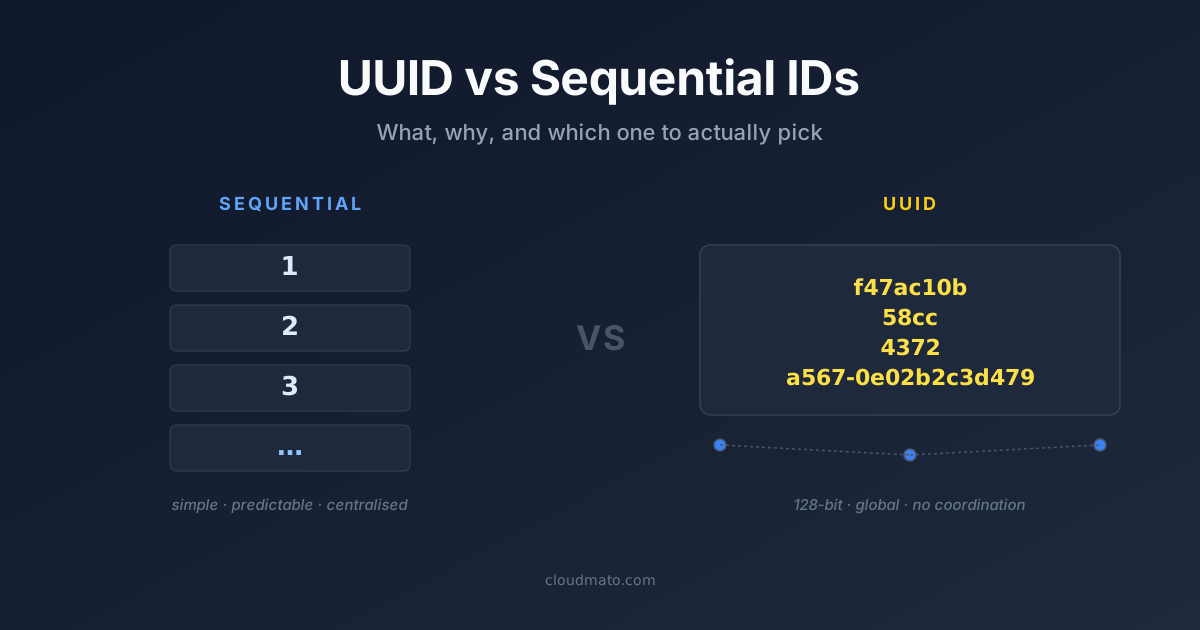
UUID vs Sequential IDs: What, Why, and Which to Pick
You expose an API endpoint like /api/orders/1042. That integer tells anyone listening — a competitor, an attacker, a curious user — exactly how many orders you have. Change the number to 1041, you get the previous order. Change it to 1, you get the very first one. No auth bypass needed. The ID itself is the information leak. That’s the sequential ID problem in one paragraph. UUID exists to fix it — and a few other things that matter at scale.
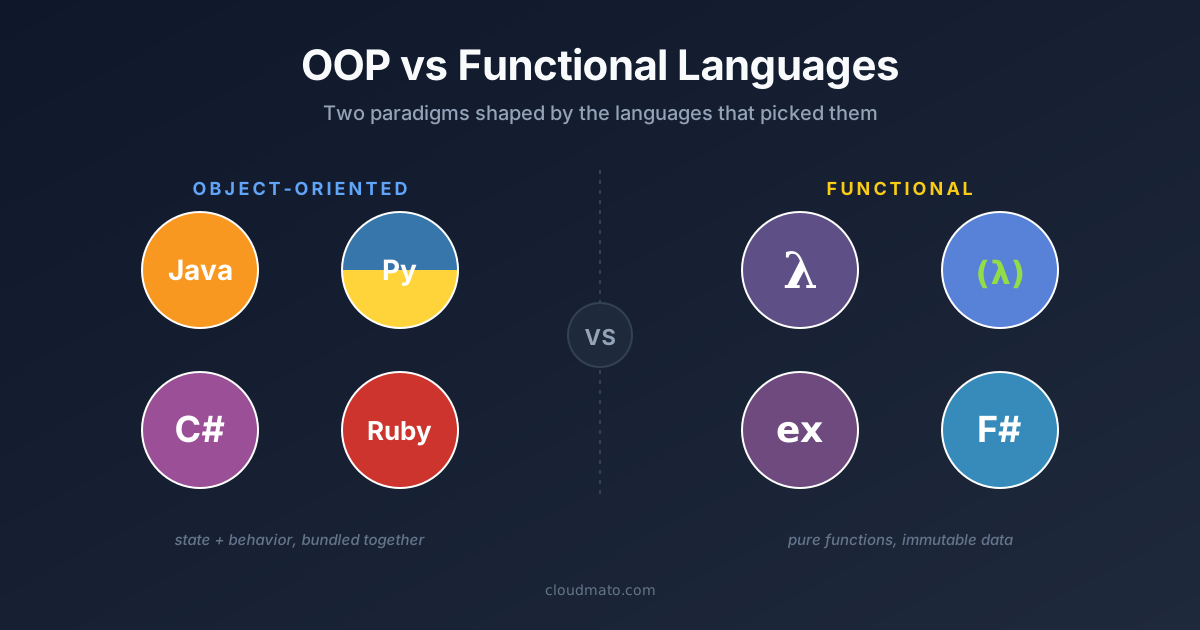
Why Use Functional Programming When OOP Exists?
OOP is 50+ years old. Classes, objects, inheritance — it works, everyone knows it, almost every popular language supports it. So why are people talking about functional programming like it’s some revelation? Because OOP is great at modelling things. FP is great at modelling transformations. Most real software has both, and conflating the two is where the confusion starts. What Is Functional Programming, Actually? Not “functions inside a class.” That’s just OOP with functions.
Kubernetes Load Balancers: Inside, Outside, or Both?
Everyone setting up a Kubernetes cluster eventually hits the same wall: how do I actually get traffic into this thing? Then the docs mention ClusterIP, NodePort, LoadBalancer, Ingress, Gateway API, MetalLB — and it spirals. Worse, there’s a Service type called “LoadBalancer” and there are actual load balancers, and they are not the same thing. Let me go through the real options, where each one sits in the stack, and what genuinely makes sense to reach for.
Zero Day Attacks: What They Are and When They Expire
I’ve seen “zero day” used in breach headlines, movie trailers, and vendor marketing emails. Almost always it means “scary hack.” That’s not wrong exactly — but it misses the precise thing that makes a zero-day structurally different from every other attack. That precision actually matters when you’re trying to understand your risk. Three Terms That Are Not the Same I see these used interchangeably constantly. They’re not.
Git: Why It Won, and What It Gets Wrong
Ninety-four percent of developers use Git [6]. The remaining six percent are mostly in specialized industries — game studios, large finance companies — and even they are slowly migrating. Every other version control system has either died, is in hospice, or survives only in a corner niche. That’s a strange outcome for software one person wrote in about two weeks. The BitKeeper Incident That Started All of This Git didn’t appear because someone sat down and thought “let me design the perfect version control system.” It appeared because someone yanked a free license away.
Apache Spark: What It Is and Why Microservices Can't Replace It
The “just scale microservices” question keeps coming up whenever Spark enters the conversation. It sounds logical — you already have distributed services, just throw more at the problem. But this comparison collapses under a pretty basic question: what kind of problem are you actually solving? It Is Not a Database. Not a Queue. People come to Spark expecting something like a faster database or a smarter Kafka. Neither is accurate.
Every Way to Center a Div in CSS, Ranked (2026)
Nobody ever forgets their first fight with CSS centering. You Google it, paste a Stack Overflow snippet, and move on — never stopping to ask if that was the right way or just a way. In 2026, there are at least seven distinct ways to center a div, and some of them should have been buried years ago. Here’s all of them, ranked worst to best. The Full Comparison Method Horizontal Vertical Verdict display: table-cell Yes Yes Never Negative margins Yes Yes Never abs + translate(-50%, -50%) Yes Yes Avoid inset: 0 + margin: auto Yes Yes Sometimes margin: auto Yes No Horizontal only Flexbox Yes Yes Good default CSS Grid Yes Yes Best default CSS Anchor Positioning Relative Relative Specific use 1. display: table-cell — Please Stop This is what people did before Flexbox existed. You wrap your element in a fake table, trick the browser into treating it like a <td>, and abuse vertical-align: middle.