cloudmato.com is a research-driven technology blog. Every article is written from live web sources with cited references — covering web development, browser internals, networking, security, databases, distributed systems, and the AI tools and models changing how software gets built.

Articles are published in English, Hindi, and Marathi so the same research reaches more readers in the language they’re comfortable with.

Browse the latest posts below, or suggest a topic.
The History Behind 10 Unix Commands You Use Every Day
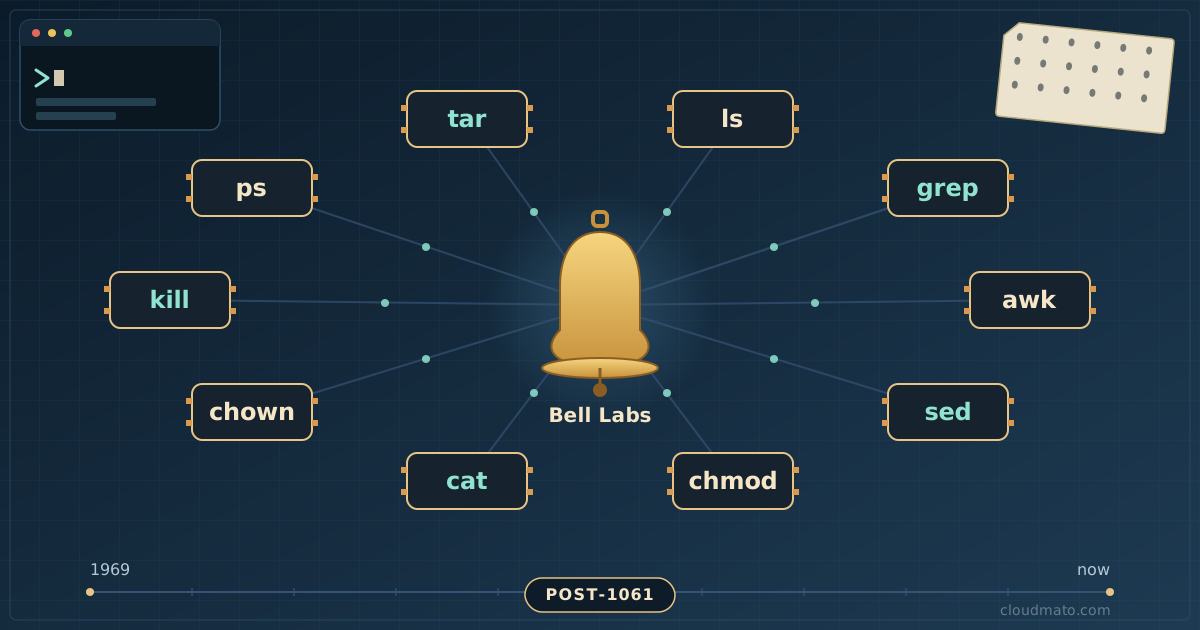
I type ls, cd, and grep probably a few hundred times a day. Never once, in 8+ years of doing this, did I stop to wonder where these tiny two-and-three letter words actually came from. Turns out, almost every single one of them has a story — some guy at Bell Labs in the early 1970s, working on a machine slower than your smartwatch, solving a problem he had that exact day. Let’s go through ten of the most-used Unix commands and dig into why they exist.
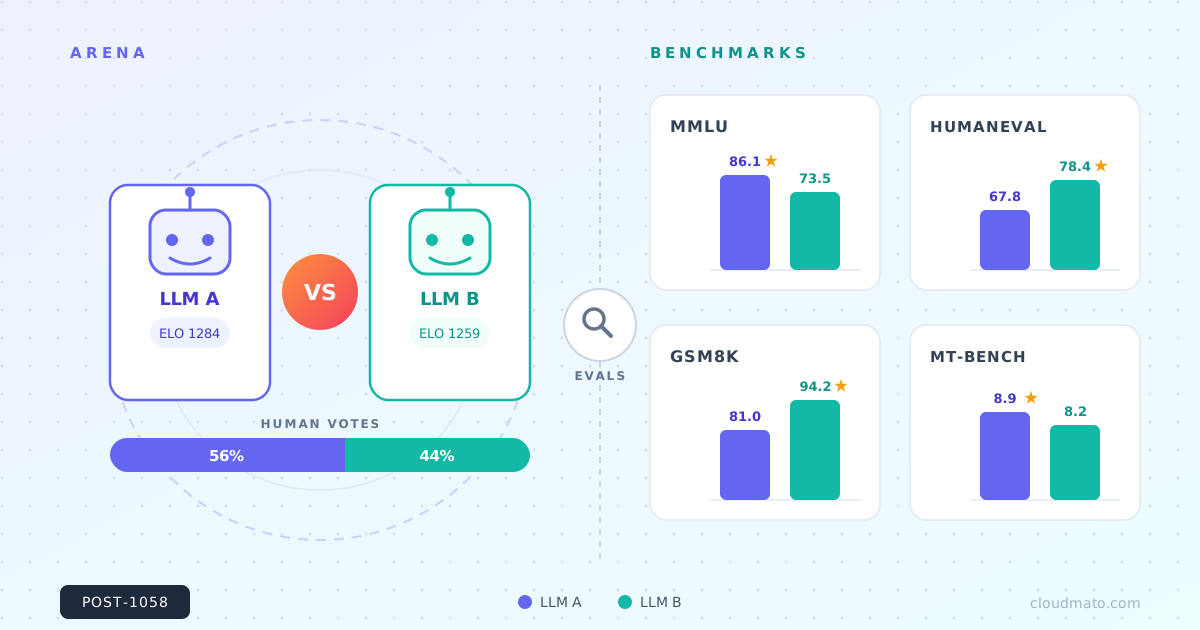
How to Test an LLM: Benchmarks, Arenas, and Real Evals
Every couple of weeks some AI lab drops a new model and immediately claims it’s the smartest thing on the planet. Then another lab does the same thing a week later. If you’ve ever tried to figure out which one is actually better, you’ve probably stared at a wall of charts with names like MMLU, GPQA, and SWE-bench and felt your eyes glaze over. I went down this rabbit hole recently, and here’s the short version: there’s no single scoreboard. There are at least four completely different ways people measure “better,” and once you know what each one is actually doing, the whole AI leaderboard circus starts to make a lot more sense.
What Is Hadoop, and Why It Isn't 10 Microservices on K8s
Someone asked me this exact question last week, and it’s a good one because both setups look the same if you squint. A bunch of machines, some shared storage in the middle, work spread across nodes. So why does one get called “big data” and the other “microservices”? Are they just two words for the same cluster? Honestly, no. They’re built on opposite assumptions about one thing: where the data lives and who moves to whom.
How OpenAI and Anthropic Actually Train Their Models
Everyone talks about ChatGPT and Claude like they just appeared one day. You type something, you get an answer, magic. But have you ever stopped to ask what it actually takes to make one of these things? Not the chat interface — the model itself. The thing that took months, hundreds of millions of dollars, and enough electricity to power a small town. I’ve been curious about this for a while, partly because the numbers are genuinely hard to believe until you sit with them. So I went digging through what’s actually known — the leaked architecture details, the hardware announcements, the data center buildouts. Some of it is public, some of it is well-sourced speculation, and some of it the labs keep deliberately vague. Let me walk you through what we actually know.
Understanding HTTP/3: Is It Really Better Than HTTP/2?
Everyone talks about HTTP/3 like it’s a free speed upgrade you flip on and forget. It mostly is — but “mostly” is doing a lot of work in that sentence. HTTP/3 is now used for roughly 35% of all web requests globally [1], so this isn’t a research toy anymore. The thing is, almost no one explains why it’s faster, where it actually loses to HTTP/2, and — the question nobody asks — whether your particular site even benefits. Let me walk through it the way I’d explain it to a friend over chai.
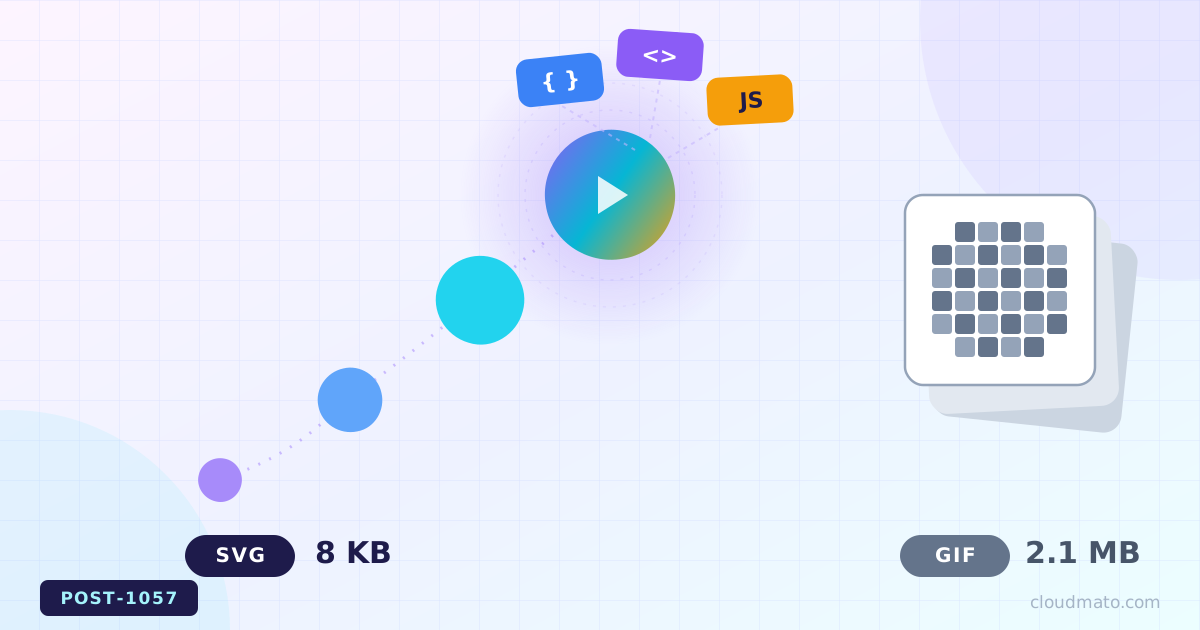
How to Create Animated SVG (And Is It Better Than GIF?)
Remember when GIFs were basically the only way to show something moving on a webpage without dragging in a full video player? Spinning loaders, little waving mascots, “loading…” icons — all GIFs, all looking slightly blurry and oddly heavy for something so small. Turns out there’s been a much better option sitting right under our noses for years: the animated SVG. Let’s get into how you actually build one, and whether it really deserves to replace GIF.
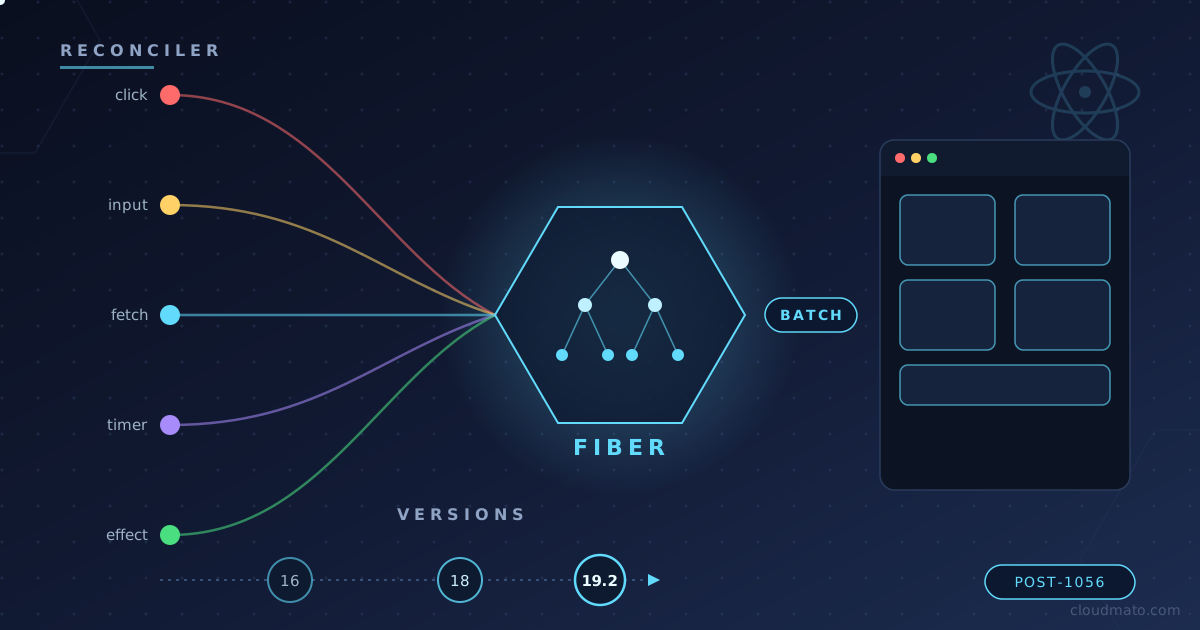
How React Really Works: Fiber and Batch Rendering Explained
Ever clicked a button in a React app and just… trusted that the UI would update correctly? Yeah, me too, for years. I never really stopped to think about what happens between setState and the pixels changing on screen — until I started debugging a component that was re-rendering five times for a single click. That rabbit hole led me straight into Fiber, lanes, and the surprisingly long history of how React decides when to actually re-render your app.
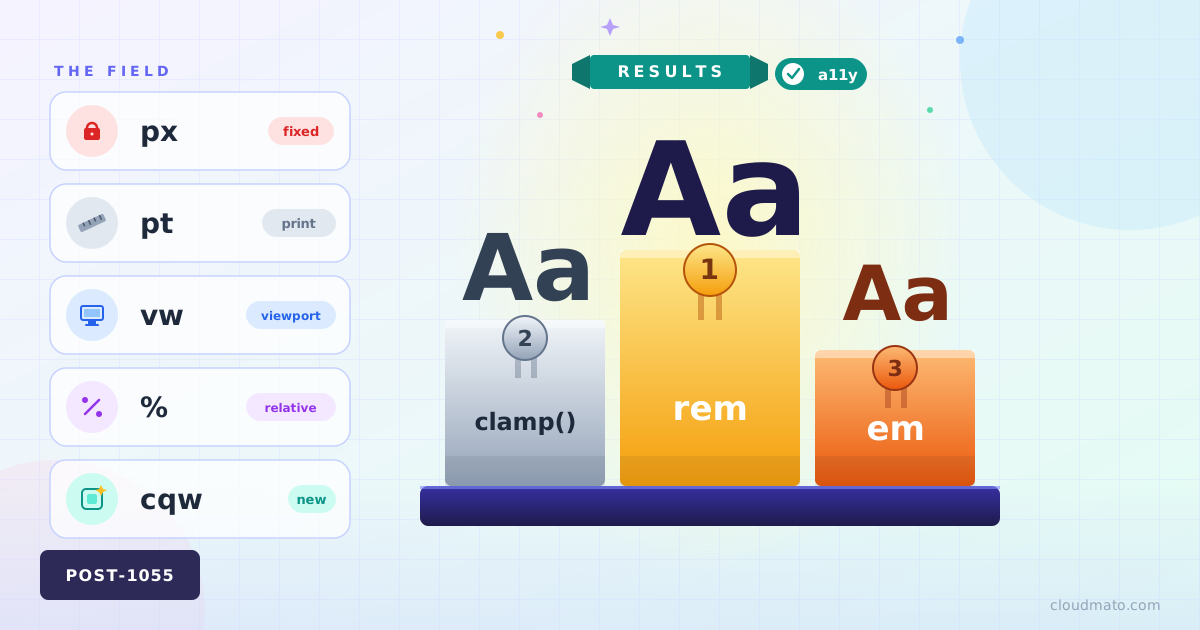
Every Way to Set Font Size in a UI (and Which Wins)
Ever opened a project’s CSS and found font sizes set in px, em, rem, %, and vw — all in the same file, sometimes on the same element? Yeah, me too. Font size feels like the most boring property in CSS until you realize there are at least eight different ways to express it, and picking the wrong one quietly breaks accessibility for a chunk of your users without throwing a single error.
Latest Tech in 2026: AI Agents, Robots, and Real Hardware
Every January some report says “this is the year AI changes everything,” and every year I roll my eyes a little. But sitting here in mid-2026, I genuinely can’t roll my eyes anymore. Browsers are agents now. Chips are shipping “physical AI” models. Robots are clocking actual factory shifts. Some of this is real progress, some of it is still marketing dressed up as a product launch — and honestly, figuring out which is which is half the fun.
DNS Records Explained: Why So Many Types Exist (Timeline)
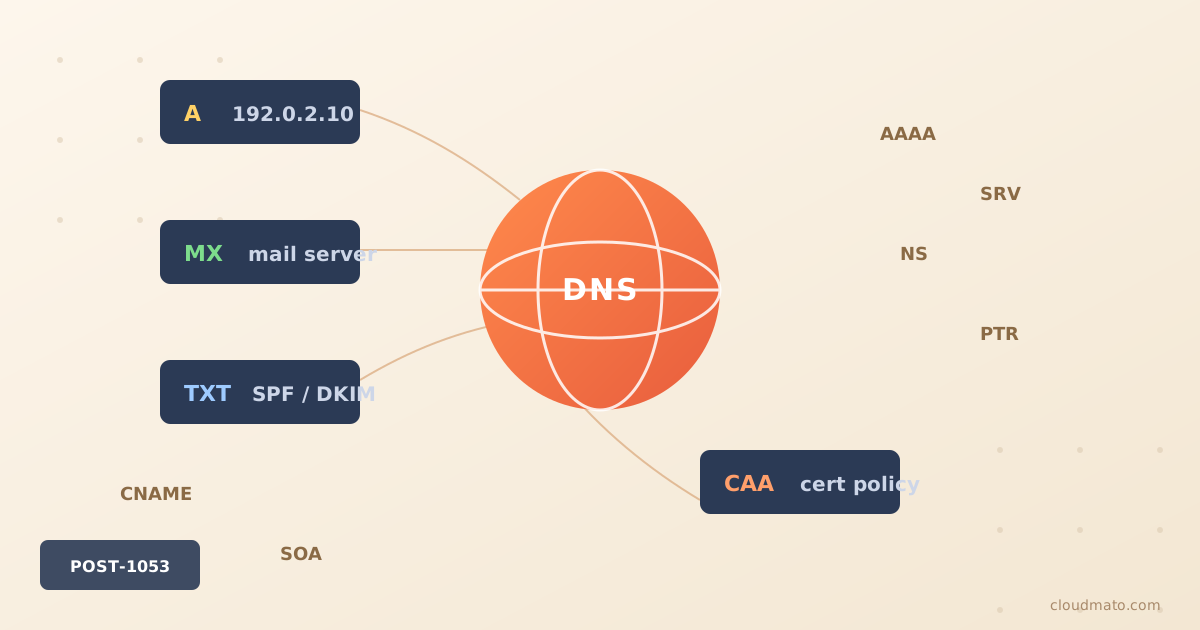
Open up any domain’s DNS settings and you’ll see a wall of cryptic codes — A, AAAA, MX, TXT, SRV, CAA, SVCB — and it genuinely looks like someone kept bolting random parts onto an old engine. Which, honestly, is exactly what happened. Every single one of these record types exists because the internet hit a wall that the existing records couldn’t get past, and once you see that history laid out, the whole mess actually starts to make sense.